Automatic translation. Printed names stay as printed. A translation can change a sentence, so the English page is the record.
Newsroom ·
News.
American Scientist is Sigma Xi's magazine, science written by the researchers who did the work. The November–December 2026 issue is in their reader, and every page turns here. POCIT Weekly is the letter from People of Color in Tech. and started it in 2015. The Edge is 's public notes from Walchwil. She writes about the research, including times when a machine is involved and a person still has to decide. Leaders.vote did not write these pieces and does not endorse them.
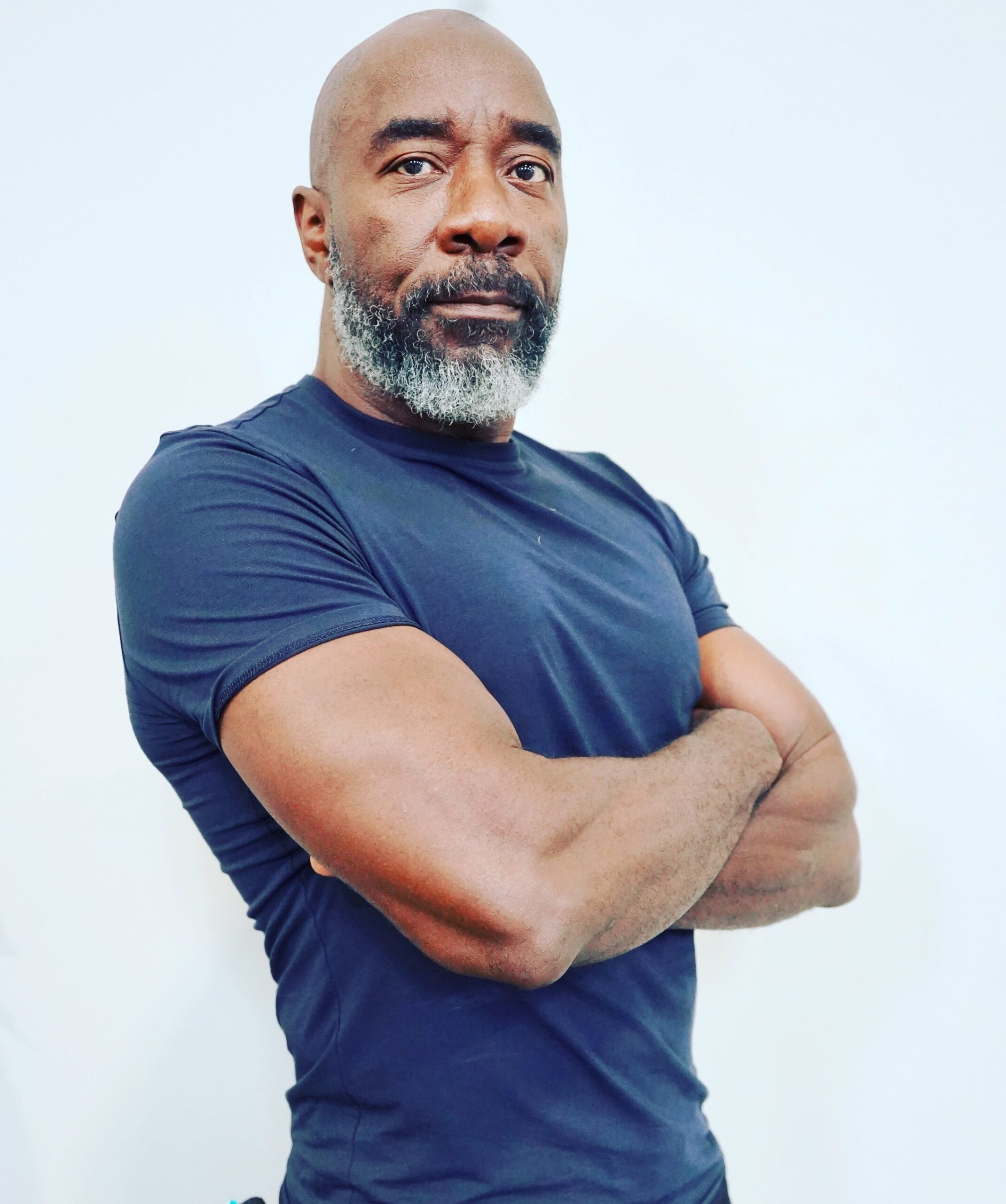
Michael Berhane
Co-founder and chief executive, People of Color in Tech
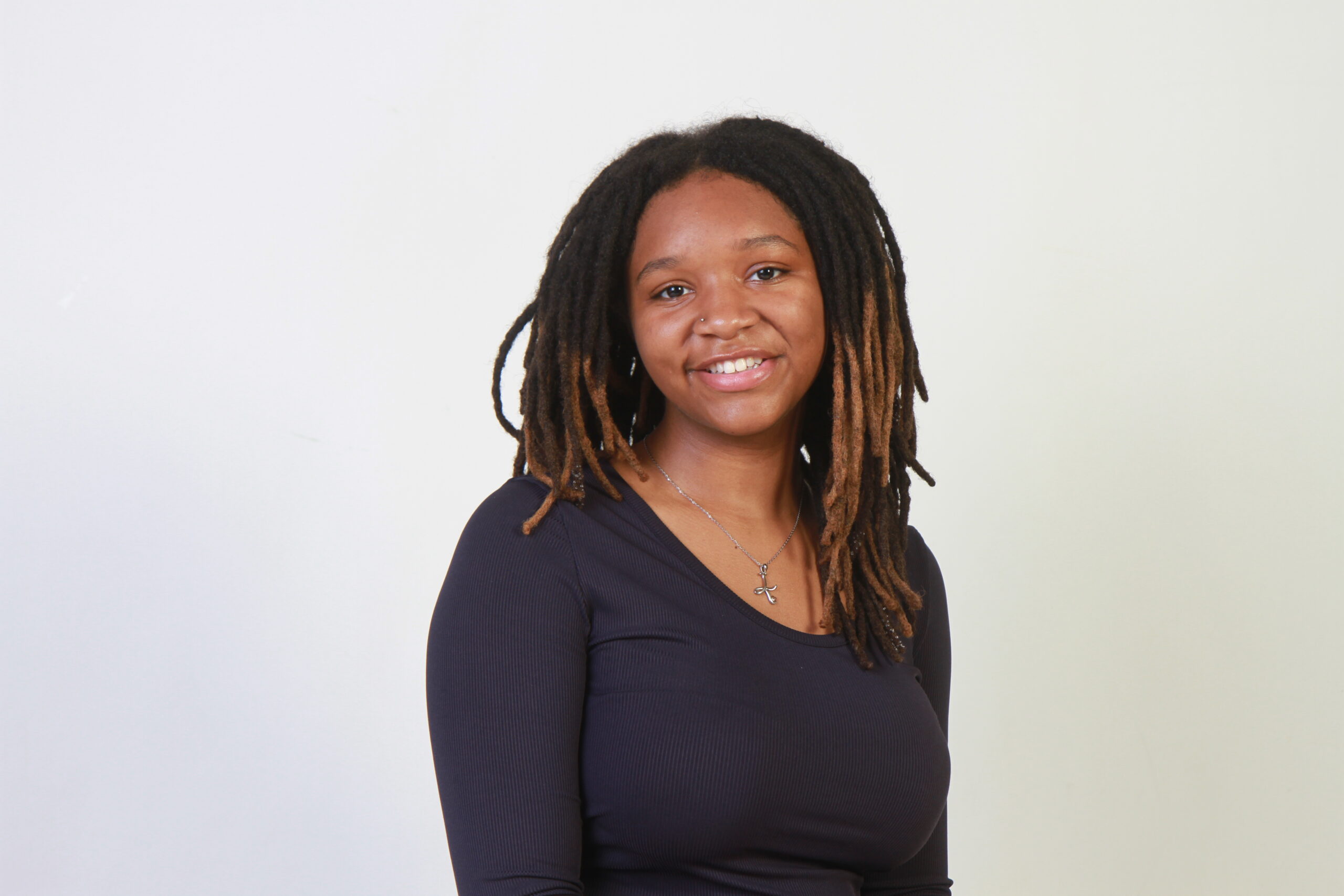
The portrait is the one on POCIT's team page. He and Ruth Mesfun started the letter in August 2015. He published michael@peopleofcolorintech.com as the address for reaching him about POCIT.
The portrait is the one on POCIT's team page. She and Michael Berhane started the letter in 2015. That page says she taught programming to high school students, and it points to @ruthmesfun.
The portrait is her public LinkedIn photo. The notes on this page are her own posts. She says a direct message there is how she takes keynotes, workshops, and board work, and that the show is on LinkedIn and YouTube.
The frame is the publisher's own reader. If it stays blank, their site is refusing to be framed. Use the open link, which goes to the same page.
American Scientist.
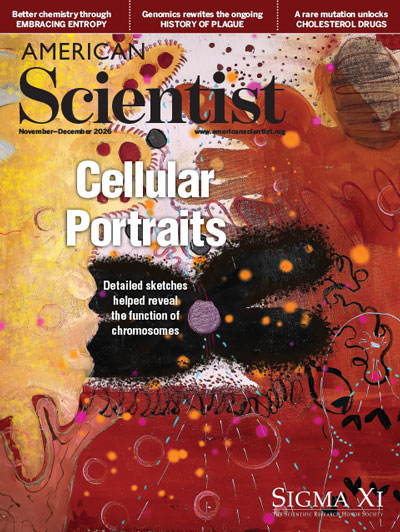
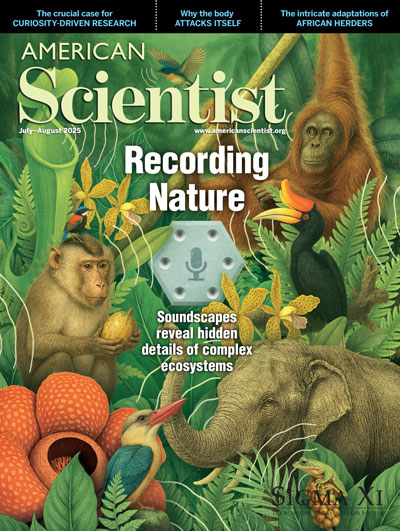
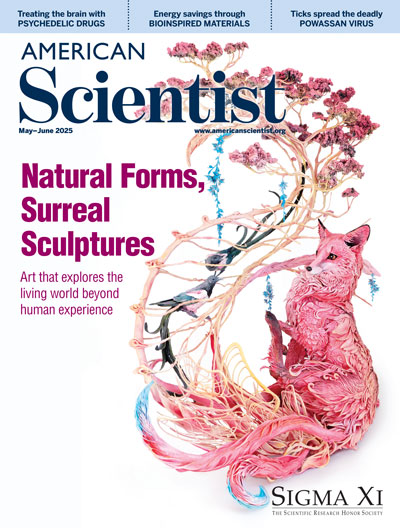
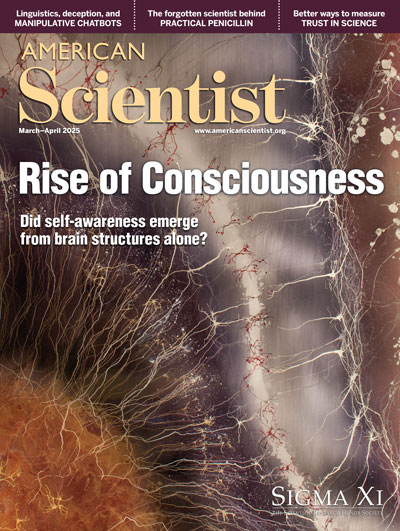
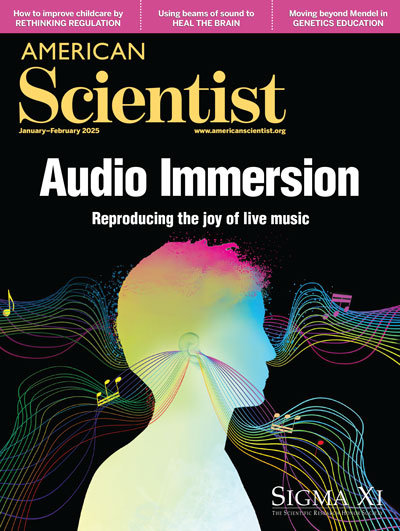
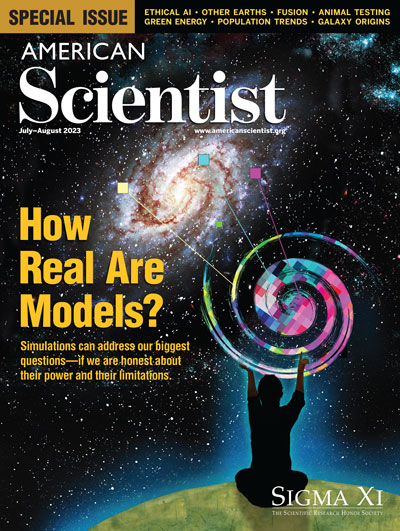
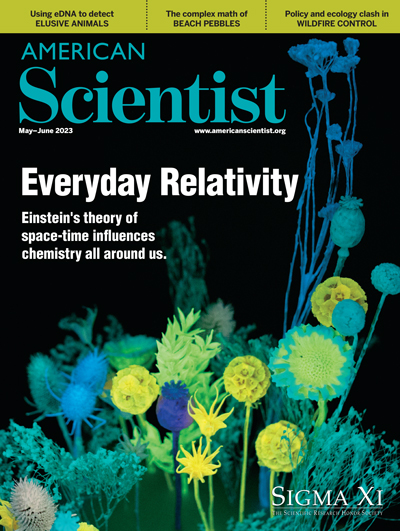
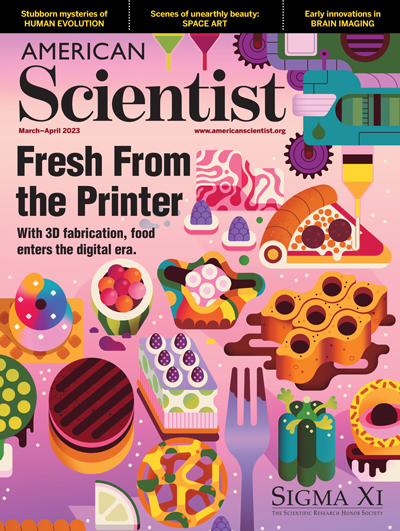
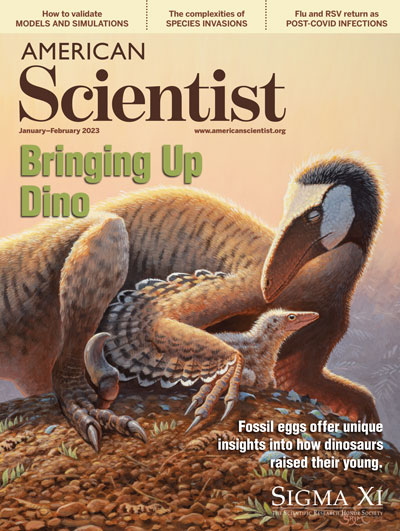
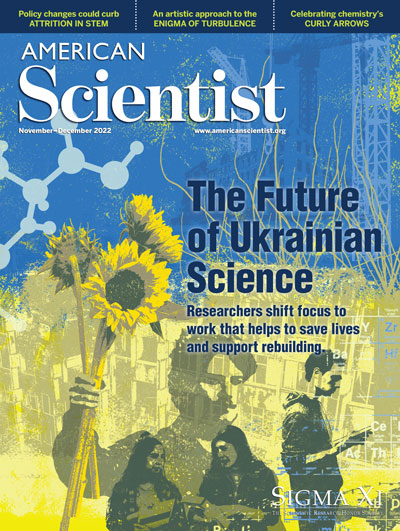
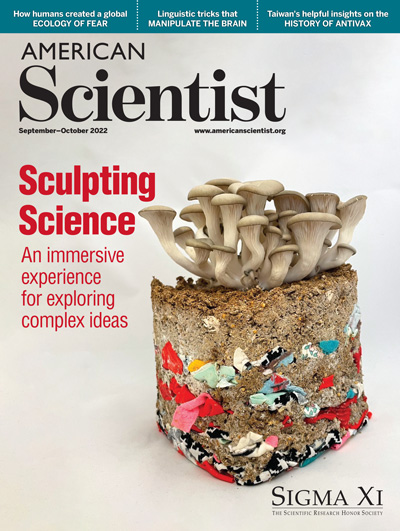
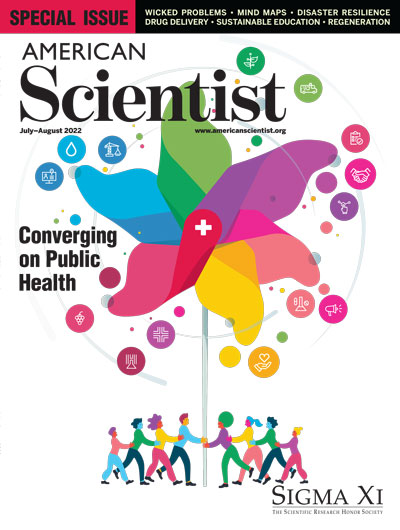
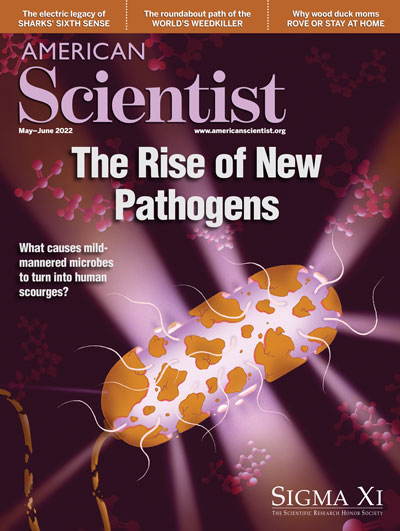
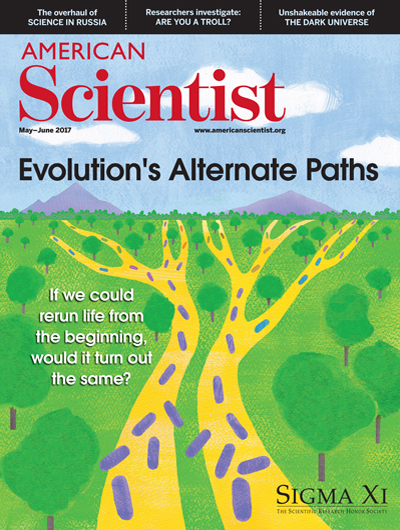
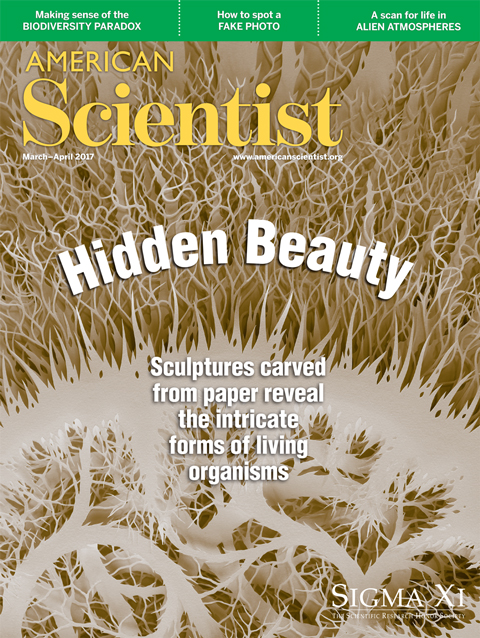
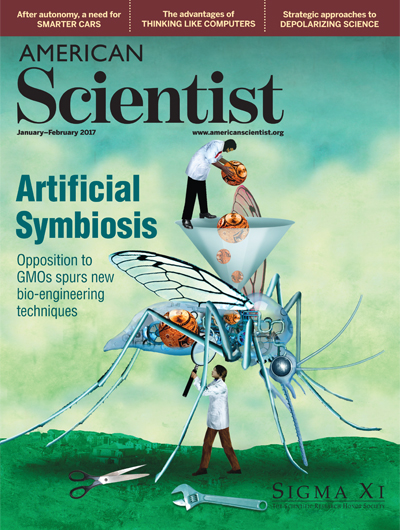
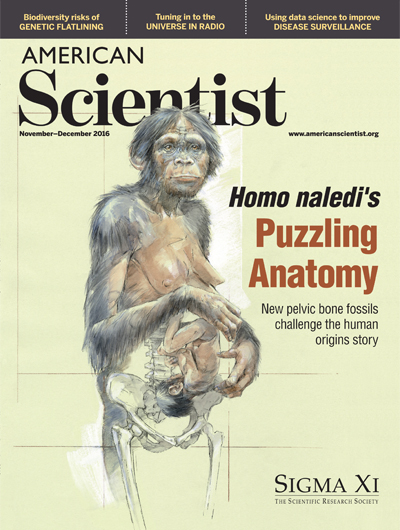
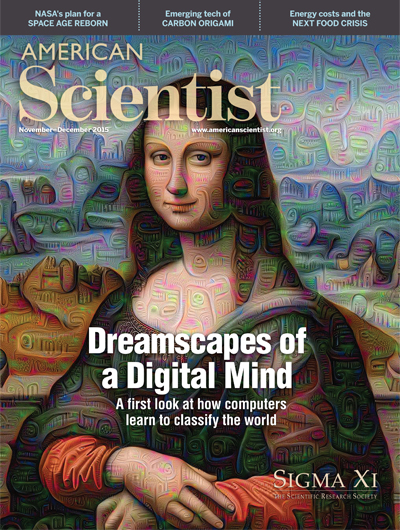
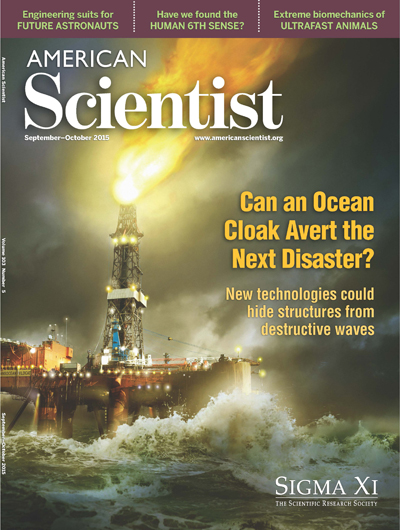
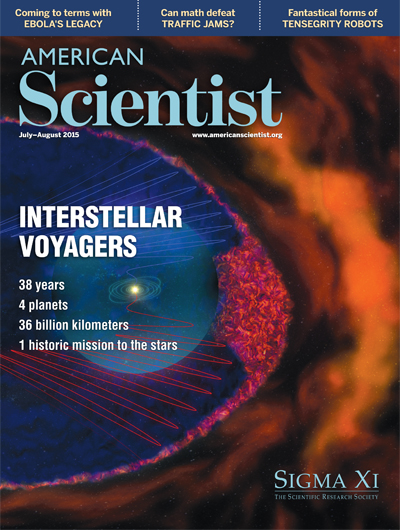
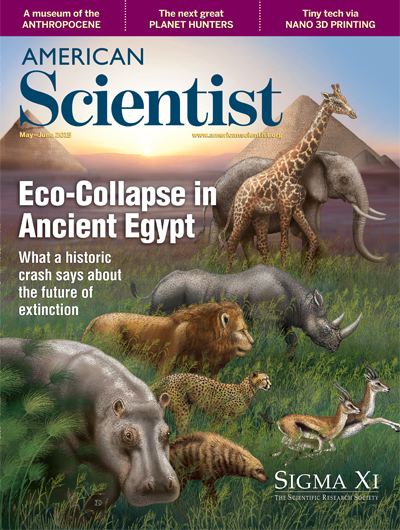
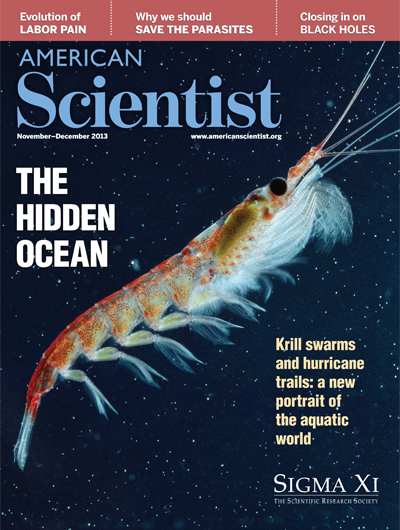
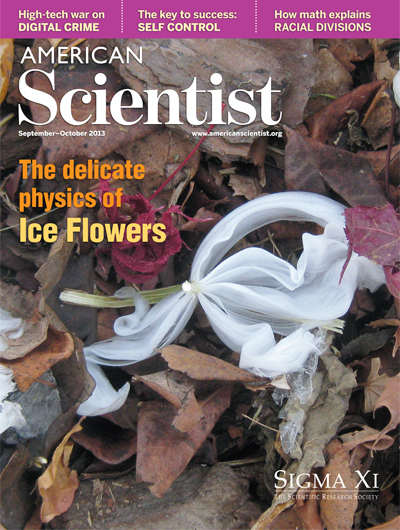
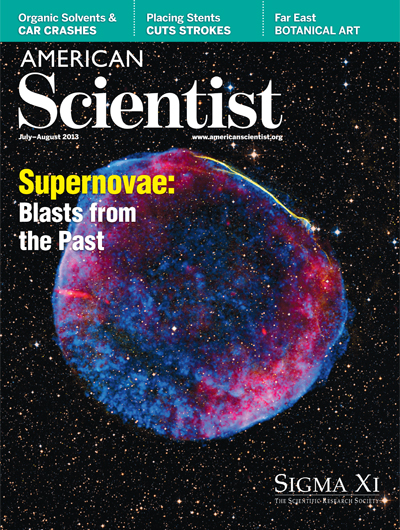
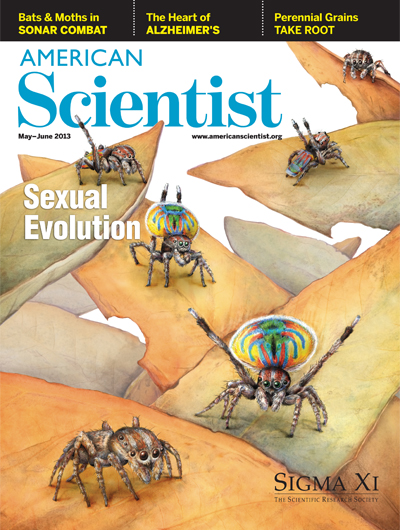
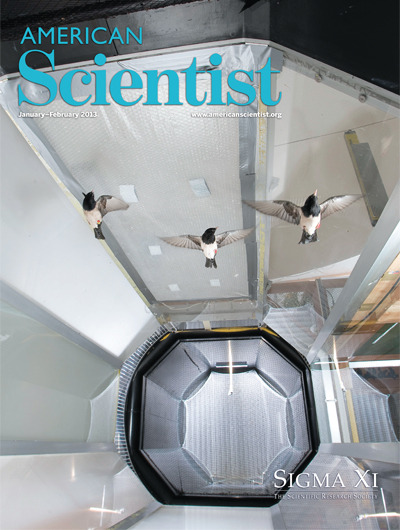
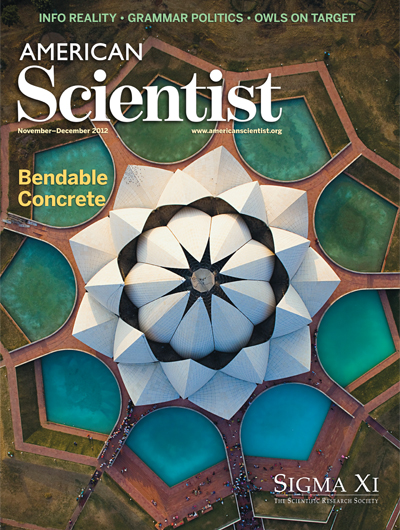
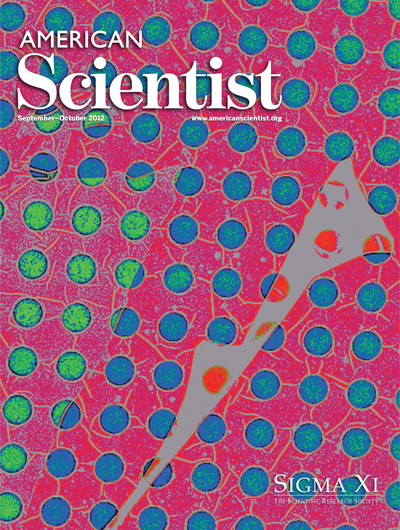
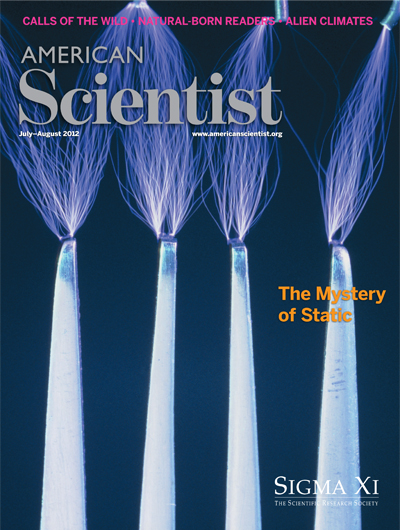
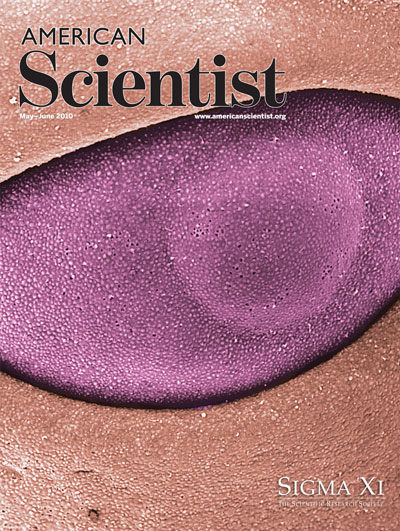
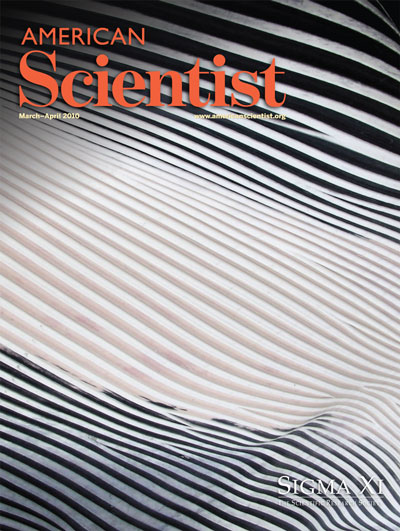
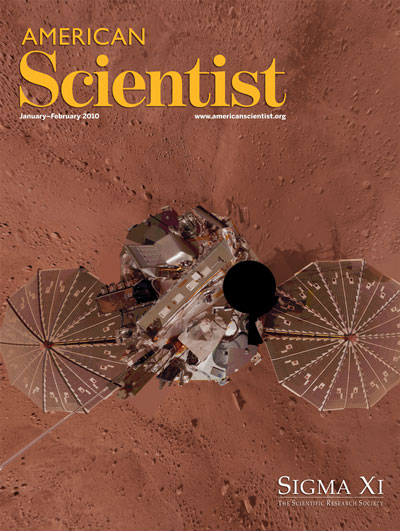
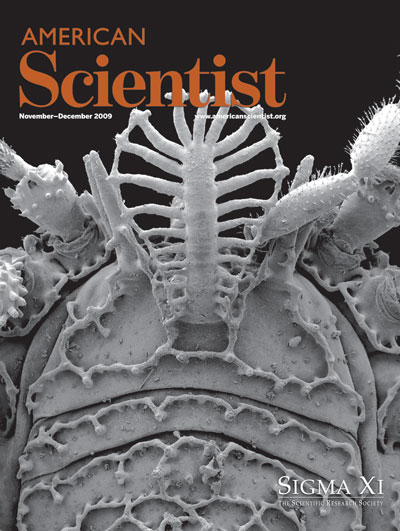
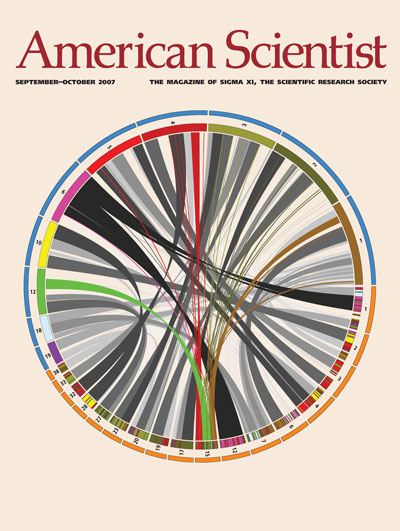
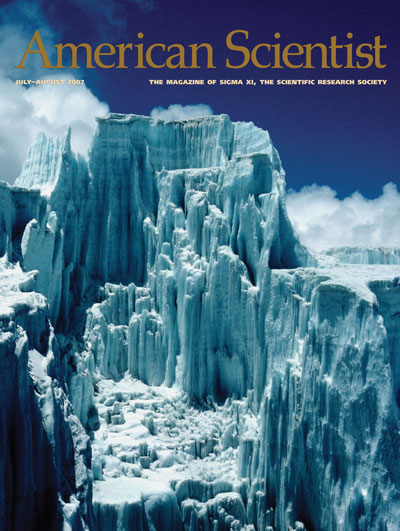
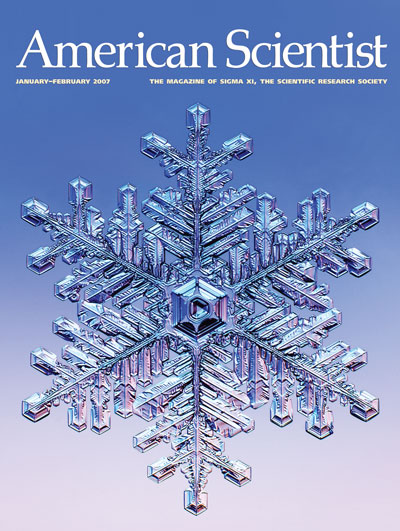
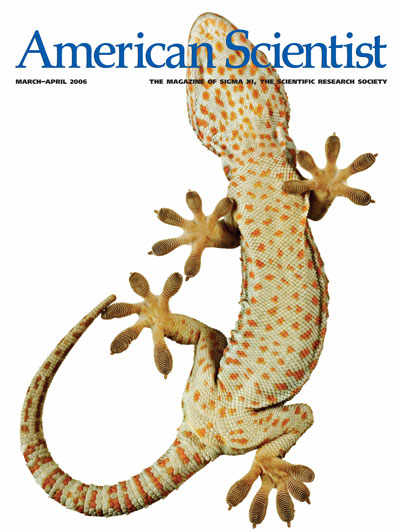
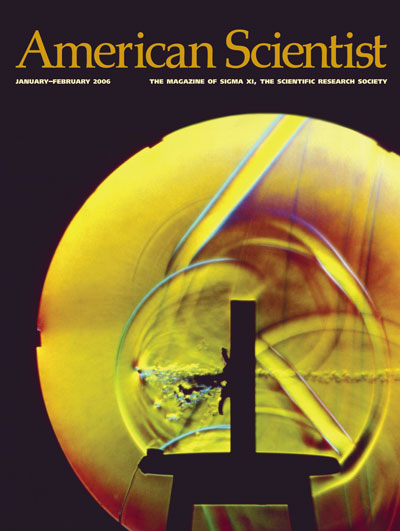
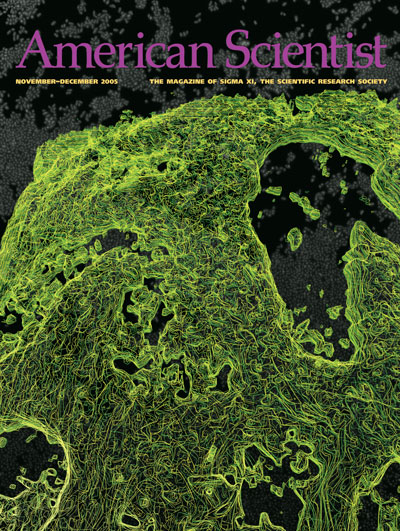
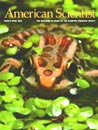
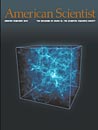
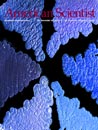
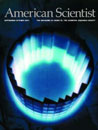
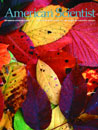
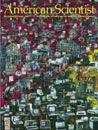
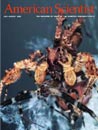
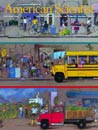
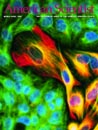
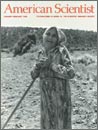
Sigma Xi's magazine. The frame opens the November–December 2026 issue, Cellular Portraits. The issue list on the frame changes to any digital edition from 2009 on, and the page box turns every page. This year’s issues are open below. When Sigma Xi lists a newer issue, it is added here with their cover and the pieces they name. Sigma Xi’s site lists every issue from 1998 on; open a year to see those covers. Click a researcher’s name for a short note, the reader page, and the address when the issue prints one. A portrait appears when a Wikipedia page matches that name. All issues.
American Scientist
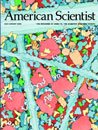
November–December 2026. Cellular Portraits.
This is the full issue in Sigma Xi's reader, not a copy stored here. The cover names chemistry and entropy, the genomics of plague, a rare mutation and cholesterol drugs, and sketches of chromosomes. Start at page 1, or type a page. If the frame is empty, open the issue in its own window.
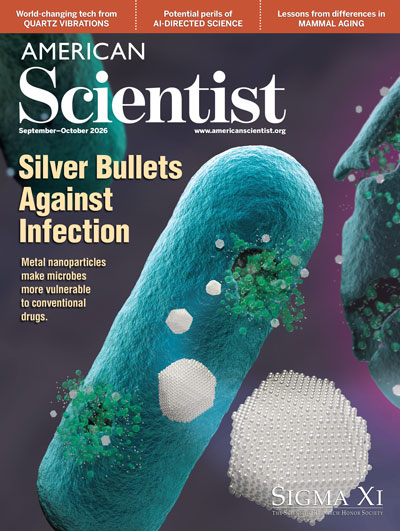
"Nanoparticles Versus Superbugs," José Rubén Morones-Ramírez. "On the Aging of Species," Christine J. Charvet. "A Lack of Horsepower," Lee Alan Dugatkin.
"The Mind and the Mirror," Russell D. Hamer. "The Ancient Mississippi River's Return," Roy Van Arsdale, Youngsang Kwon, Randel Cox, and David Lumsden. "Diversity from Isolation," Daniel T. Ksepka.
"The Discovery of Dark Comets," Darryl Z. Seligman. "Looking Through the Eye and into Alzheimer's Disease," Peter J. Snyder. "Mantle Waves," Thomas Gernon and Sascha Brune.
"Messenger RNA Can Do More for Medicine," Wei Tao and Xiangang Huang. "Weathering Space," James Welsh, Robert Peter Gale, and Andrew Karam. "The Art and Wonder of Little Beasts," Brian W. Ogilvie.
“A Revolutionary Drug to Treat and Prevent HIV Infection,” John Raul Somoza. “Trial by Fire,” William G. Fahrenholtz and Greg E. Hilmas. “Space Tourism,” Mark McCaughrean.
“The Ecoacoustics of Forests,” Becky E. Heath. “Herders from the Green Sahara,” Cesar A. Fortes-Lima, Viktor Černý, and Carina M. Schlebusch. “When the Body Turns on Itself,” Jane Buckner.
“Bioinspired Materials,” Hortense Le Ferrand, Rohit Pratyush Behera, and Slocha Sapasakulvanit. “Psychedelics Move Toward Mainstream Medicine,” Gregory A. Fonzo and Charles B. Nemeroff. “Rare but Deadly,” Durland Fish.
“Consciousness: The Road to Reductionism,” Alan J. McComas. “The Manipulative Side of Chatbots and AI,” Federico Fede and Viviana Masia. “The Birth of Stars,” Caroline Harper.
“The Science of Hi-Fi Audio,” John G. Beerends and Richard Van Everdingen. “The Discovery of Nothing,” Mark Miodownik. “Kicking Cocaine,” Douglas Small.
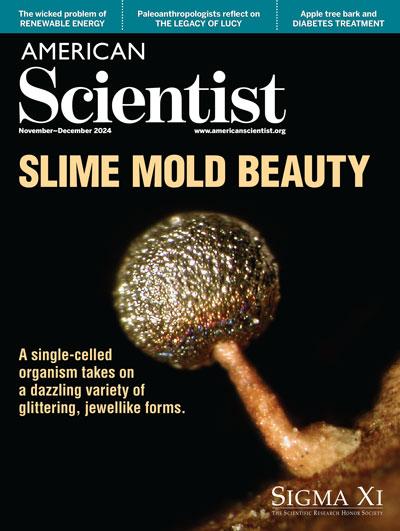
“The Myxomycetes: Nature’s Quick-Change Artists,” Harold W. Keller, Sydney E. Everhart, and Courtney M. Kilgore. “Gliflozins for Diabetes: From Bark to Bench to Bedside,” Philip A. Rea. “Baby Talk,” Darshana Narayanan.
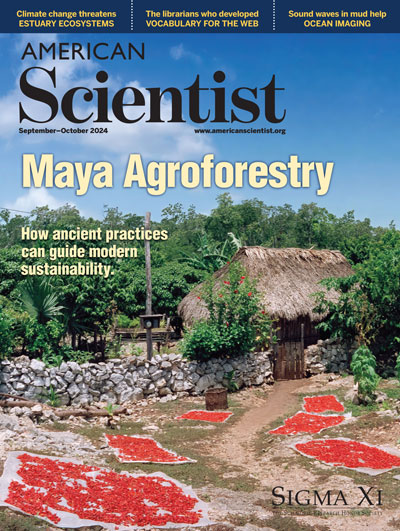
“The Enduring Forest Gardens of the Ancient Maya,” Anabel Ford. “Mud Acoustics,” Charles W. Holland, Stan E. Dosso, and Jason D. Chaytor. “Estuaries Face a Stormy,” Michael J. Kennish, Hans W. Paerl, Joseph R. Crosswell, and Kenneth A. Moore.
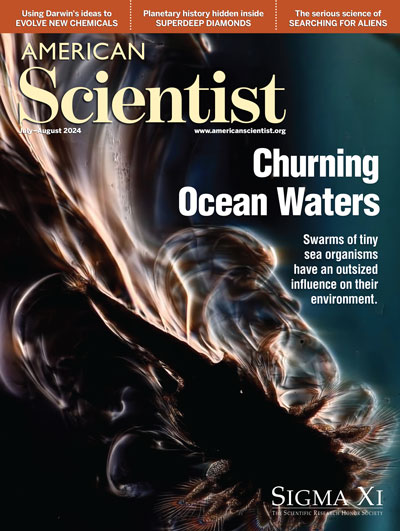
“Do Swimming Animals Mix the Ocean?,” John O. Dabiri. “The Emergence of Directed Evolution,” Harrison Ngue. “Secrets Beyond the Sparkle,” Theodore P. Snow and Don Brownlee.
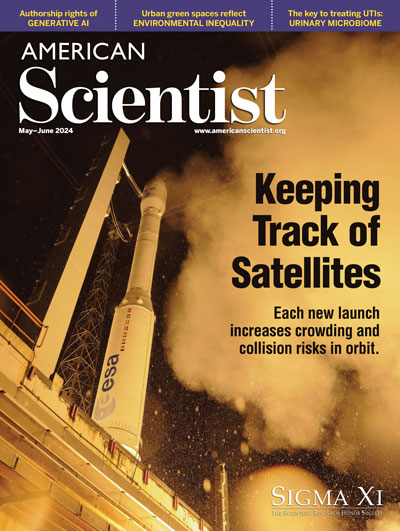
“Do You Know Where Your Satellite Is Tonight?,” David Finkleman. “Discovering the Urinary Microbiome,” Alan J. Wolfe and Linda Brubaker. “Connected Behaviors,” Lee Alan Dugatkin.
“Deconstructing DNA Beyond the Helix,” Caryn Babaian. “When Sharks Eat an Angler’s Haul,” David Shiffman. “Gas Dynamics of Solar and Stellar Winds,” Bhimsen Shivamoggi.
“Ancient DNA,” Daniel T. Ksepka. “How People Decide to Trust in Science,” Larry Au, Cristian Capotescu, Gil Eyal, and Sophia Sharp. “Sustainability Simplified,” Stephen Porder.
“Seeing” into Opaque Materials with Light and Sound,” David M. Pepper and Todd W. Murray. “Memories Within Myth,” Patrick Nunn. “Beautiful Armor,” Andreia Salvador.
“Genomic Prediction in the Big Data Era,” Gustavo de los Campos and Daniel Gianola. “Medical Imaging in Increasing Dimensions,” Ge Wang. “Time Is an Object,” Sara Walker and Lee Cronin.
“Bias Optimizers,” Damien Patrick Williams. “Building Better Growth Curves,” William E. Bennett, Jr. “A Frozen Window to the Universe,” Carlos A. Arguelles Delgado. “On the Hunt for Another Earth,” Abel Mendez.
“Relativity and the World of Molecules,” Abhik Ghosh and Kenneth Ruud. “The Math of Beach Pebble Formation,” Theodore P. Hill and Kent E. Morrison. “Pyrocene Park,” Stephen Pyne.
“A Chemist’s Guide to 3D-Printed Cuisine,” Matthew R. Hartings. “The Inevitably Incomplete Story of Human Evolution,” Bernard Wood and Alexis Uluutku. “Unearthly Beauty,” Jim Bell.
“Is Garlic Mustard an Invader or an Opportunist?,” Michael Anderson. “In Models We Trust—But First, Validate,” Daniel Solow. “A Deep Dive into Innovation,” Edward A. Wasserman.
“Ukrainian Scientists and Educators in Wartime,” Olha V. Harmatiy. “The Art of Turbulence,” Zellman Warhaft. “A Mathematician Vanishes,” Daniel S. Silver.
“The History of Vaccine Uptake in Taiwan,” HungYin Tsai. “The Art and Science of Manipulative Language,” Viviana Masia. “Performing Power,” Lee Alan Dugatkin.
“From Polymaths to Cyborgs—Convergence Is Relentless,” Ioannis Pavlidis, Ergun Akleman, and Alexander M. Petersen. “A New System for Disaster Research,” Lori Peek. “Fixing Joints That Appear Beyond Repair,” Cato Laurencin and Debolina Ghosh. “It Takes a Whole School,” Arjen E. J. Wals and Rosalie G. Mathie.
“How Bacterial Pathogens Emerge,” Salvador Almagro-Moreno. “How Glyphosate Cropped Up,” Philip A. Rea. “The Chemical History of Superior Glass,” Ainissa Ramirez.
“Evolution and the Flexible Organism,” David W. Pfennig. “Operational Oceanography,” Naomi Oreskes. “A Curator’s Tour Through Fly Collections,” Erica McAlister.
“Virtual Community Singing During the COVID-19 Pandemic,” Esther M. Morgan-Ellis. “Tiny Lights in the Brain’s Black Box,” Madeline Klinger and Markita P. Landry. “Mammoth Appetites,” Rob Dunn and Monica Sanchez.
“The Shift to a Bird’s-Eye View,” Elizabeth M. P. Madin and Catherine M. Foley. “How Endocrine Disruptors Affect Menstruation,” Kate Clancy. “Designed for Change,” Skylar Tibbits.
“Digital Ethics Online and Off,” Luciano Floridi. “The Trust Fallacy,” Nicole M Krause, Dietram A. Scheufele, Isabelle Freiling, Dominique Brossard. “Treat Human Subjects with More Humanity,” David Resnik. “Who Should Speak for the Earth?,” John W Traphagan.
“Enter the Axion,” Chanda Prescod-Weinstein. “The Chicken, the Egg, and Plate Tectonics,” Nicolas Coltice. “Turning Junk into Us: How Genes Are Born,” Emily Mortola, Manyuan Long.
“Remembrance of Germs Past,” Marc Hellerstein. “From a Swinging Chandelier to Global Positioning Systems,” Steven Strogatz. “Blind Mind’s Eye,” Adam Zeman.
“Unveiling Earth’s Wayward Twin,” Paul K. Byrne. “Plants as Teachers and Witnesses,” Beronda L. Montgomery. “Dangers of Divided Attention,” Stefan Van der Stigchel.
“Meet Your Exotic, Extinct Close Relative,” Bernard Wood and Alexis Williams. “Tearing Apart the Universe,” Katie Mack. “Hummingbird and Bat Pollinators of the Chiricahuas,” Theodore Fleming, M. Brock Fenton, and Sherri L Fenton. “Uncertain Times,” Jessica Flack and Melanie Mitchell.
“The Elusive Dingo,” Pat Shipman. “The Women Who Discovered RNA Splicing,” Pnina Geraldine Abir-Am. “Stop Me If You’ve Heard This Theorem Before,” Daniel S. Silver.
“Gene Editing and the War Against Malaria,” Ethan Bier and Elliott Sober. “Naming the Universe,” Stephen Case. “The Rise of Parkinson's Disease,” Ray Dorsey, Todd Sherer, Michael S. Okun, and Bastiaan R. Bloem.
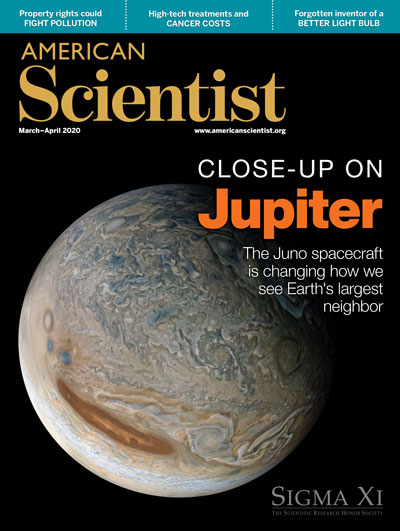
“Inside Jupiter,” Scott Bolton. “Cancer Care Is Getting Better, But Also More Expensive,” Hannah McGillivray and Richard Wassersug. “The Life and Possible Death of the Great Asian Monsoon,” Sunil Amrith.
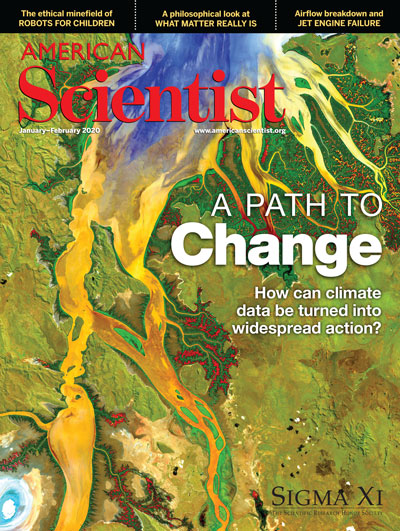
“How Climate Science Could Lead to Action,” Samantha Jo Fried. “What’s Everything Made Of?,” Charles T. Sebens. “Why Brewers Choose Barley,” Rob DeSalle and Ian Tattersall.
“The Decline of Oregon's Rare Sand Dune Lakes,” Doug W. Larson. “Expanding Consciousness,” Lars Chittka and Catherine Wilson. “Comets Are Not Forever,” Michael Werner and Peter Eisenhardt.
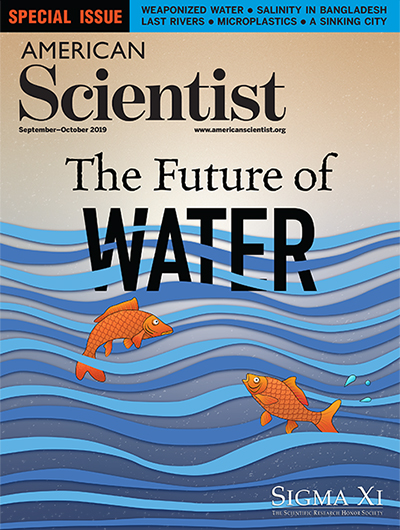
“A Delta in Peril,” Meraz Mostafa, Naznin Nasir, M. Feisal Rahman, and Saleemul Huq. “Dying for a Drink,” Marcus D. King. “Sustaining the Last Rivers,” Jeffrey J. Opperman, Sharon Baruch-Mordo, Juan Pablo Carvallo, Daniel Kammen, Joe Kiesecker, and Chris Weber. “Thirsty City on a Lake,” Manuel Perló Cohen and Loreta Castro-Reguera Mancera.
“What Mirrors Do,” Michael C. Corballis. “A Hawaiian Renaissance That Could Save the World,” Sam ʻOhukaniʻōhiʻa Gon III and Kāwika B. Winter. “Contextualizing Cave Art,” Bruno David.
“Connecting Habitats to Prevent Species Extinctions,” Stuart L. Pimm and Clinton N. Jenkins. “The Flavor of Serendipity,” Gary K. Beauchamp. “Huh? Is That a Universal Word?,” N. J. Enfield.
“Renewed Hope for Coastal Marshes in Louisiana,” Paige Byerly, Bethann Garramon Merkle, and Megan Hepner. “Knit and Stretch,” Samuel Poincloux. “The Root of Misaligned Jaws,” Sandra Kahn and Paul R. Ehrlich.
“Estimating Ancient Populations by Aerial Survey,” William E. Carter, Ramesh L. Shrestha, and Juan Carlos Fernandez-Diaz. “Is Wildlife Conservation Policy Based in Science?,” Kyle A. Artelle. “Random Paths to Frequency Hopping,” Tony Rothman.
“Gravitational Wave Astronomy,” Joey Shapiro Key and Tyson Littenberg. “Why Do Galaxies Start Out as Cosmic Pickles?,” Joel Primack. “Gaia Reveals the Milky Way,” Ronald Drimmel.
“Mystery of the Lost Reptiles,” Daniel T. Ksepka. “High-Tech Homelessness,” Virginia Eubanks. “Maxwell Zombies: Conjuring the Thermodynamic Undead,” Daniel P. Sheehan. “Learning to See,” Gene Tracy.
“Is Drug Addiction a Brain Disease?,” Marc Grifell and Carl L. Hart. “The Shape of Life,” Sophia Roosth. “Mass-Producing Graphene,” Les Johnson and Joseph E. Meany.
“The Secret History of Gravitational Waves,” Tony Rothman. “The Impish Side of Evolution’s Icon,” James T. Costa. “3D Printing of Bone Implants and Replacements,” Susmita Bose, Samuel Ford Robertson, and Amit Bandyopadhyay.
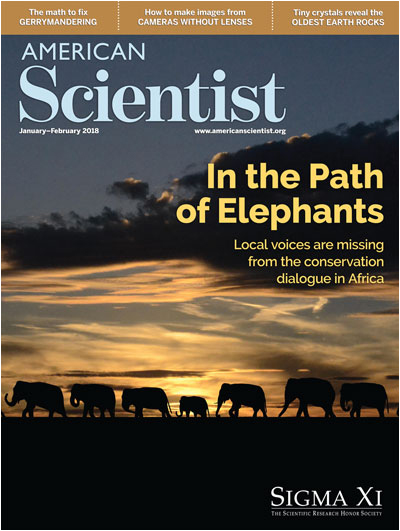
“Living in an Elephant Landscape,” Jonathan Salerno, Lin Cassidy, Michael Drake, and Joel Hartter. “Slicing Sandwiches, States, and Solar Systems,” Theodore P. Hill. “Zircons: More Precious Than Diamonds,” Donald R. Prothero.
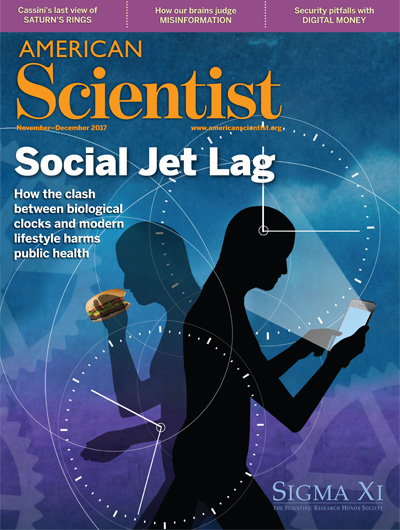
“Adapting Your Body Clock to a 24-Hour Society,” Alexis Webb and Erik Herzog. “Cassini and the Rings of Saturn,” Matthew S. Tiscareno. “The New Language of Mathematics,” Daniel S. Silver. “The Persistence and Peril of Misinformation,” Brian G. Southwell, Emily A. Thorson, and Laura Sheble.
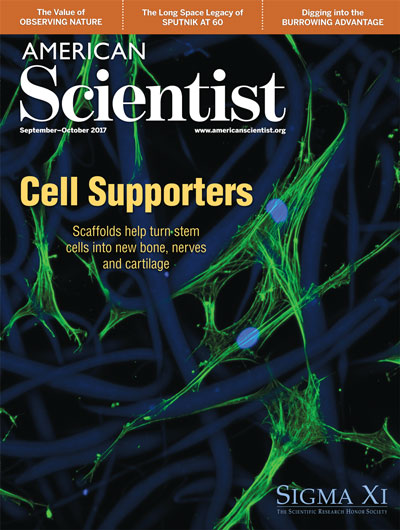
“The 'Simplest Satellite' That Opened Up the Universe,” Lev Zelenyi and Olga Zakutnyaya. “Why Ecology Needs Natural History,” John G. T. Anderson. “Structural Support for Damaged Tissue Repair,” Treena Livingston Arinzeh, Jennifer Moy, and Gloria Portocarrero Huang. “The Evolutionary Advantage of Burrowing Underground,” Anthony J. Martin.
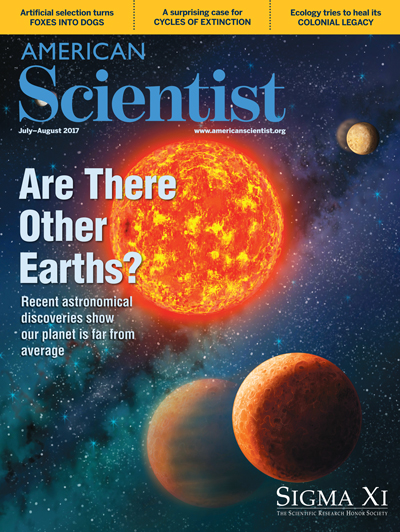
“The Colonial Origins of Tropical Field Stations,” Megan Raby. “Reexamining Lyell’s Laws,” Michael R. Rampino. “Questioning Copernican Mediocrity,” Howard A. Smith. “How to Tame a Fox and Build a Dog,” Lee Alan Dugatkin and Lyudmila Trut.
“Anyone Can Become a Troll,” Justin Cheng, Cristian Danescu-Niculescu-Mizil, Jure Leskovec, and Michael Bernstein. “Replaying Evolution”. “Circular Visualizations,” Manuel Lima. “The Dark Side of the Universe,” Pauline Gagnon.
“The Biodiversity Conservation Paradox,” Mark Velland. “Metformin: Out of the Backwaters and into the Mainstream,” Philip A. Rea and Anderson Y. Tien. “Risks and Benefits of Radiation,” Timothy J. Jorgensen.
“Blood, Guts, and Hope,” Carl M. Schoellhammer, Robert Langer, and C. Giovanni Traverso. “The Prospects of Artificial Endosymbioses,” Ryan Kerney, Zakiya Whatley, Sarah Rivera, and David Hewitt. “Photoshopping the Universe,” Travis A. Rector, Kimberly Arcand, and Megan Watzke.
“Harnessing the Web to Track the Next Outbreak,” Aranka Anema, Carly R. Winokur, Chi Bahk, Sumiko Mekaru, Nicholas Preston, and John S. Brownstein. “An Updated Prehistory of the Human Pelvis,” Caroline VanSickle. “Radio from the Sky,” Francis Graham-Smith. “The Challenge of Survival for Wild Infant Baboons,” Susan C. Alberts.
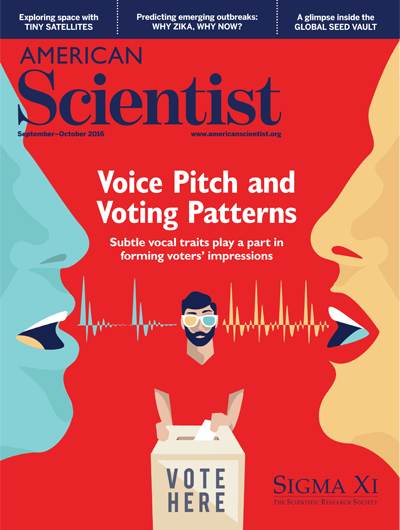
“How Voice Pitch Influences Our Choice of Leaders,” Casey A. Klofstad, Stephen Nowicki, and Rindy C. Anderson. “Invasion of the Flatworms,” Ronald Sluys. “Mathematical Induction and the Nature of British Miracles,” Daniel S. Silver. “Seeds on Ice,” Cary Fowler.
“Coexisting with Wildfire,” Max A. Moritz and Scott Gabriel Knowles. “A Constructive Chemical Conversation,” Alison Grinthal, Wim L. Noorduin, and Joanna Aizenberg. “The Road Ahead,” Henry Petroski. “G. Evelyn Hutchinson's Exultation in Natural History,” Laura J. Martin.
“Energy–Water Nexus: Head-On Collision or Near Miss?,” Kristen Averyt. “Paradoxes, Contradictions, and the Limits of Science,” Noson S. Yanofsky. “The Many Faces of Fool’s Gold,” David Rickard.
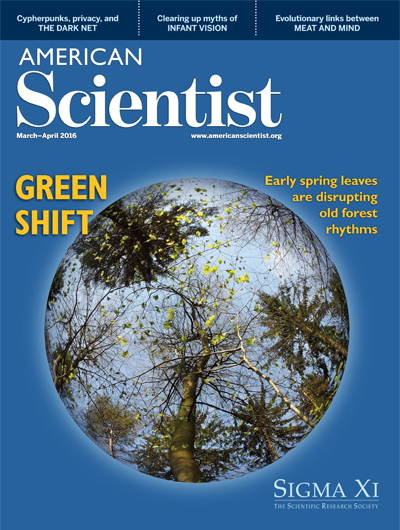
“The Visual World of Infants,” Russell D. Hamer. “Spring Budburst in a Changing Climate,” Richard B. Primack and Amanda S. Gallinat. “Meat-Eating Among the Earliest Humans,” Briana Pobiner.
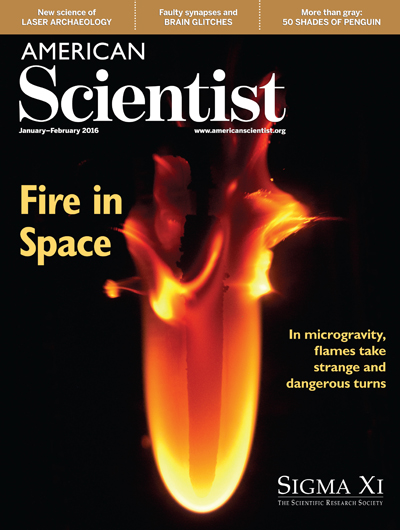
“Archaeology from the Air,” William E. Carter, Ramesh L. Shrestha, and Juan Carlos Fernandez-Diaz. “The Penguin's Palette—More Than Black and White,” Daniel T. Ksepka. “Fire in Microgravity,” Indrek S. Wichman, Sarah L. Olsen, Fletcher J. Miller, and Ashwin Hariharan.
“Where the Xingu Bends and Will Soon Break,” Mark Sabaj Pérez. “Restoring Depth to Leonardo's Mona Lisa,” Claus-Christian Carbon and Vera M. Hesslinger. “The Rising Cost of Resources and Global Indicators of Change,” Carey W. King. “In Defense of Pure Mathematics,” Daniel S. Silver.
“The Most Powerful Movements in Biology,” S.N. Patek. “The Past and Future Space Suit,” David P. Cadogan. “Do Humans Possess a Second Sense of Hearing?,” Neil Todd. “A Protective Cloak Against Earthquakes and Storms,” Gregory J. Gbur.
“African Names for American Plants,” Tinde R. van Andel. “Shark Trails of the Eastern Pacific,” A. Peter Klimley. “The Voyagers’ Odyssey,” Stamatios M. Krimigis and Robert B. Decker.
“Modern Lessons from Ancient Food Webs,” Justin D. Yeakel and Jennifer A. Dunne. “The Next Great Exoplanet Hunt,” Kevin Heng and Joshua Winn. “Taste, Sickness, and Learning,” Terry L. Davidson and Anthony L. Riley. “Fabrication at the Nano Scale with Molds and Imprinting,” Jaslyn B. K. Law. “The Fatigue Conundrum,” Ashley Nunes and Philippe Cabon.
“How Animals Communicate Via Pheromones,” Tristram D. Wyatt. “Carbon Nanotubes Deliver in Medicine,” Khuloud T. Al-Jamal. “The Origins of Lying and Deception in Everyday Life,” Michael Lewis. “Phytoliths: The Storytelling Stones Inside Plants,” Thomas C. Hart. “What Next for Particle Physics?,” Jon Butterworth.
“Arsenic, the 'King of Poisons,' in Food and Water,” Andrew Yosim, Kathryn Bailey, and Rebecca C. Fry. “Journey to the Solar System's Third Zone,” S. Alan Stern. “The Acoustic World of Harbor Porpoises,” Magnus Wahlberg, Meike Linnenschmidt, Peter T. Madsen, Danuta M. Wisniewska, and Lee A. Miller. “When the Cause of Stroke is Cryptic,” David M. Kent and David E. Thaler. “Like Holding a Piece of Sky,” Mark Miodownik.
“Candy Crush’s Puzzling Mathematics,” Toby Walsh. “The Evolutionary Truth About Living Fossils,” Alexander J. Werth and William A. Shear. “Curious Chemistry Guides Hydrangea Colors,” Henry D. Schreiber. “Estrogen in Men,” Erik Wibowo and Richard Wassersug. “The Statistical Crisis in Science,” Andrew Gelman and Eric Loken.
“A Threat to New Zealand’s Tuatara Heats Up,” Kristine L. Grayson, Nicola J. Mitchell, and Nicola J. Nelson. “Master of Missing Elements,” Eric R. Scerri. “What’s in a Grasp?,” David A. Rosenbaum, Oliver Herbort, Robrecht van der Wel, and Daniel J. Weiss. “New Twists in Earth’s Radiation Belts,” Daniel N. Baker. “Quietest Places in the World,” Trevor Cox.
“Can Skinny Fat Fight Obesity?,” Philip A. Rea, Peter Yin, and Ryan Zahalka. “Engines Powered by the Forces Between Atoms,” Fabrizio Pinto. “Why Some Animals Forgo Reproduction in Complex Societies,” Peter M. Buston and Marian Y. L. Wong. “The Deadly Dynamics of Landslides,” Susan W. Kieffer.
“On the Trail of the First Placental Mammals,” Maureen A. O'Leary. “The Hidden Past of Invisible Ink,” Kristie Macrakis. “The Fine Art of Decay,” Sara C. Robinson. “War and Redemption in Gorongosa,” Edward O. Wilson. “H.M.S. Beagle, 1820-1870,” Keith Thomson.
“Engineered Molecules for Smarter Medicines,” Darlene K. Taylor and Uddhav Balami. “Social Media Monitors the Largest Fish in the Sea,” Tim K. Davies. “The Challenge of Manufacturing Between Macro and Micro,” Robert J. Wood. “Simulating Star Formation on the Galactic Scale,” Clare Dobbs. “Twisted Math and Beautiful Geometry,” Eli Maor and Eugen Jost.
“The Dilemma of Space Debris,” David Finkleman. “Flights of Fancy in Avian Evolution,” Daniel T. Ksepka. “How to Fight Back Against Antibiotic Resistance,” Gautam Dantas and Morten O. A. Sommer. “The Visual Trickery of Obscured Animals,” Judy Diamond and Alan B. Bond. “Ocean Acidification: The Other Climate Change Issue,” Ashanti Johnson and Natasha D. White.
“The Robot Ocean Network,” Oscar Schofield, Scott Glenn, and Mark Moline. “One Family's Search to Explain a Fatal Neurological Disorder,” Nissa J. Mollema and Harry T. Orr. “On the Trail of Monster Black Holes,” Julie Hlavacek-Larrondo. “The Science of Seaweeds,” Ole G. Mouritsen.
“Lifelong Impact of Early Self-Control,” Terrie E. Moffitt, Richie Poulton, and Avshalom Caspi. “Flowers and Ribbons of Ice,” James R. Carter. “Digital Forensics,” Simson L. Garfinkel. “Citizen Science Takes Root,” Kayri Havens and Sandra Henderson.
“Illuminating Dark Energy with Supernovae,” D. Andrew Howell. “Stents to Prevent Stroke,” Stephen P. Lownie and David M. Peltz. “Solvents, Ethanol, Car Crashes and Tolerance,” Philip J. Bushnell. “Botanical Illustration in China and India,” Martyn Rix.
“Alzheimer’s Disease: The Great Morbidity of the 21st Century,” Charles T. Ambrose. “An Acoustic Arms Race,” William E. Conner. “Rapid Evolution in Eggs and Sperm,” Katrina G. Claw. “Wild Plants to the Rescue,” David Van Tassel and Lee DeHaan.
“Not Just Going with the Flow,” Frank Fish and George Lauder. “Adventures in Mathematical Knitting,” Sarah-Marie Belcastro. “Athletics and Herbal Supplements,” David S. Senchina.
“Nature Is Dead. Long Live Nature!,” Robert J. Cabin. “Switching Colors with Electricity,” Roger J. Mortimer. “Avian Migration: The Ultimate Red-Eye Flight,” Paul Bartell and Ashli Moore.
“The Information Paradox,” Peter Denning and Tim Bell. “Framing Political Messages with Grammar and Metaphor,” Teenie Matlock. “Can Concrete Be Bendable?,” Victor C. Li. “Classic: How the Owl Tracks Its Prey,” Masakazu Konishi.
“Graphene in High-Frequency Electronics,” Keith A. Jenkins. “The Complex Call of the Carolina Chickadee,” Todd M. Freeberg, Jeffrey R. Lucas, Indrikis Krams. “Slicing a Cone for Art and Science,” Daniel S. Silver.
“Vocal Matching in Animals,” Kendra B. Sewall. “What Creates Static Electricity?,” Meurig M. Williams. “Acquiring Literacy Naturally,” Dominic W. Massaro. “The Study of Climate on Alien Worlds,” Kevin Heng.
“Mind Wandering,” Michael C. Corballis. “Herschel and the Puzzle of Infrared,” Jack R. White. “Plenty of Room at the Bottom?,” William G. Eberhard and William T. Wcislo. “Aquatic Invasive Species: Lessons from Cancer Research,” Adam Sepulveda, Andrew Ray, Robert Al-Chokhachy, Clint Muhlfeld, Robert Gresswell, Jackson Gross and Jeff Kershner. “Classic: The Soap Film: An Analogue Computer,” Cyril Isenberg.
“How to Be Manipulative,” Robert M. Pringle. “Runaway Devils Lake,” Douglas Larson. Classic: “The Experimental Analysis of Behavior,” Stephen F. Ledoux.
“Empirical Software Engineering,” Greg Wilson and Jorge Aranda. “Making Biofuel from Microalgae,” Philip T. Pienkos, Lieve Laurens and Andy Aden. “Whatever Became of Holography?,” Sean F. Johnston.
“Tardigrades,” William R. Miller. “Self-healing Polymers and Composites,” S. R. White, B. J. Blaiszik, S. L. B. Kramer, S. C. Olugebefola, J. S. Moore and N. R. Sottos. “Urbanism on West Africa's Slave Coast,” J. Cameron Monroe.
“Giant Viruses,” James L. Van Etten. “The Future of Time: UTC and the Leap Second,” David Finkleman, Steve Allen, John H. Seago, Rob Seaman and P. Kenneth Seidelmann. “Alone in the Universe,” Howard A. Smith.
“Global Energy: The Latest Infatuations,” Vaclav Smil. “Marking Loons, Making Progress,” Walter Piper, Jay Mager and Charles Walcott. “Pliocene Climate Lessons,” Marci Robinson. “Porphyrins: One Ring in the Colors of Life,” Franck E. Dayan and Emilie A. Dayan.
“Fractures and Bindings of Consciousness,” Don M. Tucker and Mark D. Holmes. “From Treasury Vault to the Manhattan Project,” Cameron Reed. “Chromatin Evolving,” Gregory A. Babbitt. Classics: “Galaxies,” Virginia Trimble.
“Evolution on a Frozen Continent,” David Lambert, Craig Millar, Siva Swaminathan and Carlo Baroni. “High-power Lasers,” Todd Ditmire. “A Bigger, Better Brain,” Maddalena Bearzi and Craig Stanford. “Gifts and Perils of Landslides,” Kenneth Hewitt.
“Ivermectin and River Blindness,” Philip A. Rea, Vivian Zhang and Yelena S. Baras. “Liquid Fluoride Thorium Reactors,” Robert Hargraves and Ralph Moir. “Wiggling Through the World,” Daniel I. Goldman and David L. Hu. “Science After the Volcano Blew,” Douglas W. Larson.
“To Signal Is Human,” Alex (Sandy) Pentland. “Revealing the True Solar Corona,” Richard Woo. “Development Influences Evolution,” Katherine Willimore. “To See for One's Self,” Darin L. Wolfe.
“The Ultimate Mouthful: Lunge Feeding in Rorqual Whales,” Jeremy A. Goldbogen. “The Race for Real-time Photorealism,” Tomas Akenine-Möller and Henrik Wann Jensen. “Gene-Culture Coevolution and Human Diet,” Olii Arjamaa and Timo Vuorisalo. “Finding Alzheimer's Disease,” Ralf Dahm.
“Assessing Risks from Bisphenol A,” Heather Patisaul. “Phoenix on Mars,” Walter Goetz. “Neural Interfaces,” Warren M. Grill. “Carbon Dioxide and the Climate,” James Rodger Fleming and Gavin Schmidt.
“Spitzer's Cold Look at Space,” Michael Werner. “Harvestmen,” William A. Shear. “The Other Climate Threat: Transportation,” Andreas Schäfer, Henry D. Jacoby, John B. Heywood and Ian A. Waitz. “Going with the Floe?,” Stephanie Pfirman, Bruno Tremblay and Charles Fowler.
“Mitochondrial Death Channels,” Keith A. Webster. “Reconnecting Magnetic Fields,” James Burch and James Drake. “Taking Measure of Biofuel Limits,” Thomas R. Sinclair.
“Bubbles and Flow Patterns in Champagne,” Guillaume Polidori, Philippe, Jeandet and Gérard Liger-Belair. “Human History Written in Stone and Blood,” Zenobia Jacobs and Richard G. Roberts. “Of Beauty, Sex and Power,” Andrew Gelman and David Weakliem. “Proteomimicry,” Jerry H. Brown.
“The Origin of Life,” James Trefil, Harold Morowitz and Eric Smith. “Fermi, Pasta, Ulam and the Birth of Experimental Mathematics,” Mason A. Porter, Norman J. Zabusky, Bambi Hu and David K. Campbell. “The Deprived Human Brain,” Charles A. Nelson III, Elizabeth A. Furtado, Nathan A. Fox and Charles H. Zeanah, Jr.. “Revisiting the Limits to Growth After Peak Oil,” Charles A. S. Hall and John W. Day, Jr..
“Real-time Flood Forecasting,” Chintu Lai, Ting-Kuei Tsay, Chen-Chien and I-Ling Wu. “Knowing When to Stop,” Theodore P. Hill. “The Long-lived Transistor,” Robert W. Keyes. “A Cipher to Thomas Jefferson,” Lawren M. Smithline.
“Getting the Most from Energy,” Thomas Casten and Phillip Schewe. “Healing Heat: Harnessing Infection to Fight Cancer,” Uwe Hobohm. “Kashmir Valley Megaearthquakes,” Susan Hough, Roger Billham and Ismail Bhat. “The Bones of Copernicus,” Dennis Danielson.
“Genomics Confounds Gene Classification,” Michael Seringhaus and Mark Gerstein. “Virtual Fossils from 425 Million-year-old Volcanic Ash,” Derek E. Briggs, Derek J. Siveter, David J. Siveter and Mark Sutton. “UV Lights Up Marine Fish,” Jill P. Zamzow, Peter A. Nelson and George S. Losey. “Rocket Science and Russian Spies,” Joseph A. Castellano.
“Evolution 'for the Good of the Group',” David Sloan Wilson and Edward O. Wilson. “Fifty Years of Earth-Observation Satellites,” Andrew J. Tatem, Scott J. Goetz and Simon I. Hay. “Water News: Bad, Good and Virtual,” Vaclav Smil. “Statins: From Fungus to Pharma,” Philip A. Rea.
“Binary Stars with Habitable Planets,” Nader Haghighipour. “Ecological Responses to Climate Change on the Antarctic Peninsula,” Norman D. Cook and Takefumi Hayashi. “The Psychoacoustics of Harmony Perception,” Vaclav Smil. “The First Discovery of DNA,” Ralf Dahm.
“The Two-Faced Moon,” P. Surdas Mohit. “The Neglected Side of Parkinson's Disease,” Ted L. Rothstein and C. Warren Olanow. “Twisting Light to Trap Atoms,” Sonja Franke-Arnold and Aidan S. Arnold. “Tip-of-the-Tongue States Yield Language Insights,” Lise Abrams.
“Bird Song and the Problem of Honest Communication,” William A. Searcy and Stephen Nowicki. “Safer Vehicles for People and the Planet,” Thomas P. Wenzel and Marc Ross. “Tectonic Plates Come Apart at the Seams,” J. Brendan Murphy, Gabriel Gutiérrez-Alonso, R. Damian Nance, Javier Fernández-Suárez, J. Duncan Keppie, Cecilio Quesada, Rob A. Strachan and Jaroslav Dostal. “The Rise of Coffee,” Fernando E. Vega. “Mesa Verde Migrations,” Timothy A. Kohler, Mark D. Varien, Aaron Wright, Kristin A. Kuckelman.
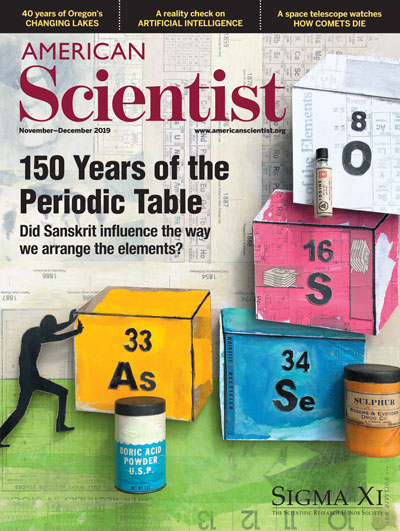
“The Phenotypic Plasticity of Death Valley's Pupfish,” Sean C. Lema. “Salivary Diagnostics,” David T. Wong. “A Stone-Age Meeting of Minds,” Thomas Wynn and Frederick L. Coolidge. “The Past and Future of the Periodic Table,” Eric R. Scerri.
“Safer Salads,” Jorge M. Fonseca and Sadhana Ravishankar. “Breeding Better Buildings,” Rafal Kicinger and Tomasz Arciszewski. “The Origins of Larvae,” Donald I. Williamson and Sonya E. Vickers. “The Other Evolution Wars,” David Kaiser.
“Genetics and the Shape of Dogs,” Elaine A. Ostrander. “Are Planetary Systems Filled to Capacity?,” Steven Soter. “Secrets in the Shell,” Roberto Ballarini and Arthur H. Heuer. “Revolutionary Minds,” Susan Solomon, John S. Daniel and Daniel L. Druckenbrod.
“The Shrinking Glaciers of Kilimanjaro: Can Global Warming Be Blamed?,” Philip W. Mote and Georg Kaser. “Feel the Burn,” Gina M. Story and Lillian Cruz-Orengo. “Cassini: The First One Thousand Days,” Carolyn C. Porco. “Kelvin, Perry and the Age of the Earth,” Philip C. England, Peter Molnar and Frank M. Richter.
“Liquid-Mirror Telescopes,” Paul Hickson. “Extreme Microbes,” Shiladitya DasSarma. “Soot: Giver and Taker of Light,” Christopher R. Shaddix and Timothy C. Williams. “The Uniqueness of Human Recursive Thinking,” Michael C. Corballis. “The Most Dangerous Equation,” Howard Wainer.
“Uncovering Prehistoric Hurricane Activity,” Kam-biu Liu. “Multiscale Modeling in Biology,” Santiago Schnell, Ramon Grima and Philip K. Maini. “Imprinted and More Equal,” Randy L. Jirtle and Jennifer R. Weidman. “Amber's Botanical Origins Revealed,” Jorge A. Santiago-Blay and Joseph B. Lambert. “Plug-in Hybrid Vehicles for a Sustainable Future,” Andrew A. Frank.
“Why We Develop Food Allergies,” Per Brandtzaeg. “Gauging Earthquake Hazards with Precariously Balanced Rocks,” James N. Brune, Matthew D. Purvance and Abdolrasool Anooshehpoor. “The Mysterious Origins of the Sweet Apple,” Barrie E. Juniper. “The Formation of Snow Crystals,” Kenneth G. Libbrecht. “When Averages Hide Individual Differences in Clinical Trials,” David Kent and Rodney Hayward.
“Gracilization of the Modern Human Skeleton,” Christopher B. Ruff. “Tamper-Indicating Seals,” Roger G. Johnston. “Embarrassment: A Form of Social Pain,” Christine R. Harris. “The Sounds of Spacetime,” Craig J. Hogan. “Growing Up with Chernobyl,” Robert K. Chesser and Robert J. Baker.
“Rethinking the Fall of Easter Island,” Terry L. Hunt. “Extrasolar Planetary Systems,” Gregory P. Laughlin. “Algae-Dominated Reefs,” Peter S. Vroom, Kimberly N. Page, Jean C. Kenyon and Russell E. Brainard. “Modifying Light,” Joseph A. Castellano. “The Zebrafish Exposed,” Ralf Dahm.
“Protecting Ourselves from Shellfish Poisoning,” Mary Wilcox Silver. “Sleep to Remember,” Matthew P. Walker. “The Source of Europe's Mild Climate,” Richard Seager. “Constructing Animal Locomotion from New Thermodynamics Theory,” Adrian Bejan and James H. Marden. “The Topology and Combinatorics of Soccer Balls,” Dieter Kotschick.
“Group Decision Making in Honey Bee Swarms,” Thomas D. Seeley, P. Kirk Visscher and Kevin M. Passino. “The Interplanetary Transport Network,” Shane D. Ross. “Genetic Strategies for Controlling Mosquito-Borne Diseases,” Fred Gould, Krisztian Magori and Yunxin Huang. “Perceptual Pleasure and the Brain,” Irving Biederman and Edward A. Vessel. “A Coprological View of Ancestral Pueblo Cannibalism,” Karl J. Reinhard.
“How Gecko Toes Stick,” Kellar Autumn. “Winning the Accuracy Game,” Hugh G. Gauch, Jr.. “The Cognitive Psychology of Belief in the Supernatural,” Jesse M. Bering. “Filaments of Light,” Jérôme Kasparian. “Knot Theory's Odd Origins,” Daniel S. Silver.
“High-speed Imaging of Shock Waves, Explosions and Gunshots,” Gary S. Settles. “First Life,” Michael Russell. “A Bright Future for Subwavelength Light Sources,” Tineke Thio. “Fallout from Nuclear Weapons Tests and Cancer Risks,” Steven L. Simon, André Bouville and Charles E. Land. “Ancient Lakes of the Sahara,” Kevin White and David J. Mattingly.
“Biofilms,” Joe J. Harrison, Raymond J. Turner, Lyrium L. R. Marques and Howard Ceri. “Imaging Earthlike Exoplanets,” Thomas J. Sherrill. “How Tunas and Lamnid Sharks Swim: An Evolutionary Convergence,” Robert E. Shadwick. “Yawning,” Robert R. Provine. “Ancient Wollemi Pines Resurgent,” Stephan McLoughlin and Vivi Vajda.
“Fighting Cancer Through the Study of Sarcomas,” Igor Matushansky and Robert Maki. “Detecting Illicit Nuclear Materials,” Richard T. Kouzes. “Cheating Viruses and Game Theory,” Paul E. Turner. “Charting Color from the Eye of the Beholder,” Edward R. Landa and Mark D. Fairchild. “Water Fountains with Special Effects,” Said Shakerin.
“A New Understanding of Protein Mutation Unfolds,” P. Michael Conn and Jo Ann Janovick. “Climate and the Collapse of Maya Civilization,” Larry C. Peterson and Gerald H. Haug. “Feeling Smart: The Science of Emotional Intelligence,” Daisy Grewal and Peter Salovey. “The Mystery of Masting in Trees,” Walter D. Koenig and Johannes M. H. Knops. “The Collapse of the Kinzua Viaduct,” Thomas Leech.
“Predicting a Baseball's Path,” A. Terry Bahill, David G. Baldwin and Jayendran Venkateswaran. “The Lion's Mane,” Peyton M. West. “Polarization of the Cosmic Microwave Background,” Matthew Hedman. “New Ideas About Old Sharks,” Susan Turner and Randall F. Miller. “Science and Religious Fundamentalism in the 1920s,” Edward B. Davis.
“The Ecology and Evolution of Hawaiian Spider Communities,” Rosemary Gillespie. “Fuel Efficiency and the Economy,” Roger H. Bezdek and Robert M. Wendling. “Predicting Addiction,” Lisa N. Legrand, William G. Iacono and Matt McGue. “Monitoring Elusive Mammals,” James G. Sanderson, Mogens Trolle. “Physics and Feynman's Diagrams,” David Kaiser.
“Exercise Controls Gene Expression,” Frank W. Booth and P. Darrell Neufer. “The Star-formation History of the Universe,” Alan Heavens. “The Home of Blue Water Fish,” A. Peter Klimley, John E. Richert and Salvador J. Jorgensen. “Explosives Detection with Nuclear Quadrupole Resonance,” Joel B. Miller and Geoffrey A. Barrall. “Grass-roots Justice in Tanzania,” Brian Paciotti, Craig Hadley, Christopher Holmes and Monique Borgerhoff Mulder.
“Plant Scents,” Eran Pichersky. “Heavy-Metal Nuclear Power,” Eric P. Loewen. “Relative Pitch and the Song of Black-Capped Chickadees,” Ron G. Weisman and Laurene Ratcliffe. “The Puzzling Origins of AIDS,” Jim Moore. “The Decline of the Blue Crab,” Richard F. Lee and Marc E. Frischer.
“Cell Fusion,” Brenda M. Ogle and Jeffrey L. Platt. “Diamagnetic Levitation,” Ronald E. Pelrine. “The Design and Function of Cochlear Implants,” Michael F. Dorman and Blake S. Wilson. “The Lifestyles of the Trilobites,” Richard A. Fortey. “The World's Highest Forest,” Jessica Purcell, Alan Brelsford and Michael Kessler.
“How Do Supercontinents Assemble?,” J. Brendan Murphy and R. Damian Nance. “Mad-Cow Disease in Cattle and Human Beings,” Paul Brown. “Amazing Organohalogens,” Gordon W. Gribble. “Gravitational Waves and the Effort to Detect Them,” Peter S. Shawhan. “Free Will and Free Won't,” Sukhvinder S. Obhi and Patrick Haggard.
“The Imperiled Giants of the Mekong,” Zeb S. Hogan, Peter B. Moyle, Bernie May, M. Jake Vander Zanden and Ian G. Baird. “Optically Trapped Fermi Gases,” John E. Thomas and Michael E. Gehm. “The Structure of the Human Brain,” John S. Allen, Joel Bruss and Hanna Damasio. “Leaves, Flowers and Garbage Bags: Making Waves,” Eran Sharon, Michael Marder and Harry L. Swinney. “The Shadow Effect and the Case of Félix Tisserand,” William I. McLaughlin and Sylvia L. Miller.
“Internal Tides and the Continental Slope,” David A. Cacchione and Lincoln F. Pratson. “Amphibian Decline and Emerging Disease,” Joseph M. Kiesecker, Lisa K. Belden, Katriona Shea and Michael J. Rubbo. “The Origin of Matter,” James M. Cline. “The Artificial Nile,” Scott W. Nixon. “The Adaptive Value of Religious Ritual,” Richard Sosis.
“The Cosmic Web,” Robert A. Simcoe. “Human Biomonitoring of Environmental Chemicals,” Ken Sexton, Larry L. Needham and James L. Pirkle. “Ancient Earthquakes at Lake Lucerne,” Michael Schnellmann, Flavio S. Anselmetti, Domenico Giardini, Judith A. McKenzie and Steven N. Ward. “Salt Marshes Under Siege,” Mark Bertness, Brian Reed Silliman and Robert Jefferies. “The Evolution of Jealousy,” Christine R. Harris.
“Aging: A Biological Perspective,” Robert Arking. “The Centers of Planets,” Sandro Scandolo and Raymond Jeanloz. “Survival of the Fittest Molecule,” Willem Stemmer and Brett Holland. “The Origin of Gold in South Africa,” Jason Kirk, Joaquin Ruiz, John Chesley and Spencer Titley. “Moving Up in the World,” Mark S. Aldenderfer.
“Thorium Fuel for Nuclear Energy,” Mujid S. Kazimi. “The Importance of Context in Genetics,” H. Frederik Nijhout. “Discovering the Edge of the Solar System,” Chadwick A. Trujillo. “The Sweet Science of Glycobiology,” Ram Sasisekharan and James R. Myette. “The Useful Pursuit of Shadows,” Graeme L. Stephens.
“Alzheimer's Disease,” Vernon M. Ingram. “Ice at the Lunar Poles,” Richard R. Vondrak and Dana H. Crider. “The Value of Positive Emotions,” Barbara L. Fredrickson. “Quantum Erasure,” Stephen P. Walborn, Marcelo O. Terra Cunha, Sebastião Pádua and Carlos H. Monken. “Conserving Biodiversity Coldspots,” Peter Kareiva and Michelle Marvier.
“Prenatal Hormone Exposure and Sexual Variation,” John G. Vandenbergh. “The Kindness of Strangers,” Robert V. Levine. “Foresight in Genome Evolution,” Lynn Helena Caporale. “The Ancient Ceramics of West Mexico,” Robert B. Pickering, Ephraim Cuevas. “Science in 2006, Revisited,” Lewis M. Branscomb.
“Influenza,” Robert G. Webster and Elizabeth Jane Walker. “Dating Ancient Mortar,” John Hale, Jan Heinemeier, Lynne Lancaster, Alf Lindroos and Åsa Ringbom. “New Antibiotics and New Resistance,” Carlos Amábile-Cuevas. “Ecologically Sustainable Yield,” Richard W. Zabel, Chris J. Harvey, Steven L. Katz, Thomas P. Good and Phillip S. Levin. “Genealogy in the Era of Genomics,” Susanna C. Manrubia, Bernard Derrida and Damián H. Zanette.
“How the Retina Works,” Helga Kolb. “The Hubble Constant and the Expanding Universe,” Wendy Freedman. “Mud, Marine Snow and Coral Reefs,” Eric Wolanski, Robert Richmond, Laurence McCook and Hugh Sweatman. “Bayh-Dole Reform and the Progress of Biomedicine,” Arti K. Rai and Rebecca S. Eisenberg. “H2O,” David Goldes.
“Managing the Environmental Legacy of U.S. Nuclear-Weapons Production,” Kevin D. Crowley and John F. Ahearne. “Why Leaves Turn Red,” David Lee and Kevin Gould. “The Origin of the Solar Wind,” Richard Woo and Shadia Rifai Habbal. “Magnetic Resonance Imaging with Polarized Gases,” Stephen Kadlecek. “Science as Theater,” Kirsten Shepherd-Barr and Harry Lustig.
“Observing the Beginning of Time,” Craig J. Hogan. “Ethnoclimatology in the Andes,” Benjamin S. Orlove, John C. H. Chiang and Mark A. Cane. “Deep-Ocean Life Where Oxygen Is Scarce,” Lisa A. Levin. “Protein Folding and Misfolding,” Jonathan King, Cameron Haase-Pettingell and David Gossard. “Gardening in Space,” David E. H. Jones.
“Serendipitous Radiation Monitors,” Robert L. Fleischer. “The Evolutionary Ecology of Escherichia coli,” Valeria Souza, Amanda Castillo and Luis Eguiarte. “Cluster Dynamics: Fast Reactions and Coulomb Explosion,” Lutz Poth, Eric S. Wisniewski and A. Welford Castleman, Jr.. “Protein Structures: From Famine to Feast,” Helen M. Berman, David S. Goodsell and Philip Bourne. “Greek Astronomy and the Medieval Arabic Tradition,” George Saliba.
“The Global Transport of Dust,” Dale W. Griffin, Christina A. Kellogg, Virginia H. Garrison and Eugene A. Shinn. “Why We See What We Do,” Dale Purves, R. Beau Lotto and Surajit Nundy. “Traffic Crashes,” Leonard Evans. “Hybridization and Extinction,” Donald A. Levin. “Quantum Identity,” Peter Pesic.
“Adaptive Radiation of Darwin's Finches,” Peter R. Grant and B. Rosemary Grant. “Free-Floating Planets and Stellar Clusters,” Jarrod Hurley and Michael Shara. “The Rise and Fall of Rudist Reefs,” Claudia Johnson. “Manatees, Bioacoustics and Boats,” Edmund R. Gerstein. “Computers, Paradoxes and the Foundations of Mathematics,” Gregory J. Chaitin.
“The Eurasian Arctic During the Last Ice Age,” Martin J. Siegert, Julian A. Dowdeswell, John-Inge Svendsen and Anders Elverhøi. “Newborn Screening for Metabolic Diseases,” David S. Millington. “Tides and the Biosphere of Europa,” Richard Greenberg. “The Kolam Tradition,” Marcia Ascher. “Probing the Depths of Crater Lake,” Douglas W. Larson (Biology).
“The Formation and Evolution of the Milky Way,” Cristina Chiappini. “Spintronics,” Sankar Das Sarma. “Chaos on the Quantum Scale,” Mason A. Porter, Richard L. Liboff. “The Challenge of Siphonous Green Algae,” Peter S. Vroom and Celia M. Smith. “Health and Human Society,” Clyde Hertzman.
“Microspheres, Photonic Atoms and the Physics of Nothing,” Stephen Arnold. “Pathogens, Host-Cell Invasion and Disease,” Erich Gulbins and Florian Lang. “Life After Death in the Deep Sea,” Richard A. Lutz, Timothy M. Shank and Robert Evans. “An Argument for the Cometary Origin of the Biosphere,” Armand H. Delsemme. “The Shape of the Universe: Ten Possibilities,” Colin Adams and Joey Shapiro.
“Protostars,” Thomas Greene. “Iris Recognition,” John Daugman. “The MAX Phases: Unique New Carbide and Nitride Materials,” Michel W. Barsoum and Tamer El-Raghy. “The Nature of Emotions,” Robert Plutchik. “Science and Uncertainty in Habitat Conservation Planning,” Laura Watchman, Martha Groom and John D. Perrine.
“How Were the Comets Made?,” Joseph A. Nuth III. “Preserving Salmon Biodiversity,” Phillip S. Levin and Michael H. Schiewe. “Combing Chromosomes,” John Herrick and Aaron Bensimon. “Probing Gas Hydrate Deposits,” Robert L. Kleinberg and Peter G. Brewer. “Alfalfa,” Michael P. Russelle.
“Gene Therapy for Pain,” Jay Yang and Christopher L. Wu. “Thermoelectric Clathrates,” George S. Nolas and Glen A. Slack. “Protecting Ourselves from Food,” Paul W. Sherman and Samuel M. Flaxman. “Biocavity Lasers,” Paul Gourley and Darryl Sasaki. “Ecology of Transgenic Crops,” Michelle Marvier.
“The Growing Threat of Biological Weapons,” Steven M. Block. “Superflares and Giant Planets,” Eric P. Rubenstein. “Vertebrate Biology in Microgravity,” Richard J. Wassersug. “In Defense of Robert Andrews Millikan,” David Goodstein.
“White Dwarf Stars,” Steven Kawaler and Michael Dahlstrom. “Gene Chips and Functional Genomics,” Hisham Hamadeh and Cynthia Afshari. “The Power of Sound,” Steven L. Garrett and Scott Backhaus. “Scientific Publication Trends and the Developing World,” Antonio Gálvez, Mercedes Maqueda, Manuel Martínez-Bueno and Eva Valdivia. “The Case of Agent Gorbachev,” Kristie Macrakis.
“The Search for QCD Exotics,” Alex R. Dzierba, Curtis A. Meyer and Eric S. Swanson. “Pollination of Cacti in the Sonoran Desert,” Theodore H. Fleming. “A New Urban Ecology,” James P. Collins, Ann Kinzig, Nancy B. Grimm, William F. Fagan, Diane Hope, Jianguo Wu and Elizabeth Borer. “Brain Plasticity and Recovery from Stroke,” Nina P. Azari and Rüdiger J. Seitz. “Andrew Ellicott Douglass and the Big Trees,” Donald J. McGraw.
“Depression and the Birth and Death of Brain Cells,” Barry L. Jacobs, Henriette van Praag and Fred H. Gage. “Testing Ecological Patterns,” James G. Sanderson. “The Heart of the Milky Way,” Fulvio Melia. “Mathematical Devices for Getting a Fair Share,” Theodore P. Hill. “Measuring Success in Conservation,” Leah R. Gerber, Douglas P. DeMaster and Simona Perry Roberts.
“Reengineering the Electric Grid,” Thomas J. Overbye. “Biomolecules and Nanotechnology,” David S. Goodsell. “Vision and the Coding of Natural Images,” Bruno A. Olshausen and David J. Field. “Mitochondrial DNA and the Peopling of the New World,” Theodore G. Schurr. “Superconducting Cosmic Strings,” Alejandro Gangui.
“Tracking Down a Cheating Gene,” Barry Ganetzky. “Simulating Solar Prominences in the Laboratory,” Paul M. Bellan. “What Do Animals Think About Numbers?,” Marc D. Hauser. “Foams and Honeycombs,” Erica G. Klarreich. “Electroshock Revisited,” Max Fink.
“Impacts of Industrial Animal Production on Rivers and Estuaries,” Michael A. Mallin. “Connecting Materials Science and Music in Steel Drums,” Lawrence E. Murr and Everaldo Ferreyra Tello. “Fishing Down Aquatic Food Webs,” Daniel Pauly, Villy Christensen, Rainer Froese and Maria Lourdes Palomares. “The Galactic Environment of the Sun,” Priscilla Frisch. “Fifty Years of Radiocarbon Dating,” R. E. Taylor. “The Women Scientists of Bologna,” Maria Cieslak-Golonka and Bruno Morten.
“Antarctica's Lake Vostok,” Martin J. Siegert. “Prokaryotes,” Michael Hoppert and Frank Mayer. “Water, Migration and the Serengeti Ecosystem,” Eric Wolanski, Emmanuel Gereta, Markus Borner and Simon Mduma. “How Will Climate Change Affect Human Health?,” Pim Martens.
“Cliffs as Natural Refuges,” Douglas W. Larson (Plant Ecology), Uta Matthes and Peter E. Kelly. “Deconstructing the Milky Way Galaxy,” Henry Freudenreich. “Stingless-Bee Communication,” James C. Nieh. “Conformal Mappings,” Steven G. Krantz. “Ancient DNA,” George Poinar, Jr..
“Rapid Climate Change,” Kendrick Taylor. “DNA Vaccines as Cancer Treatment,” Edward P. Cohen, Edwin F. de Zoeten and Morton Schatzman. “Polarized Starlight and the Handedness of Life,” Stuart Clark. “The Mystery of Ticklish Laughter,” Christine R. Harris. “Human Embryonic Stem-Cell Research: Science and Ethics,” Shirley Wright.
“Neutrino Oscillations,” Kenji Kaneyuki and Kate Scholberg. “Millipeds,” William A. Shear. “Gene Therapy,” Eric B. Kmiec. “Light-Reflection Strategies,” Andrew Parker. “The New Science of Finance,” Don M. Chance and Pamela P. Peterson.
“The Evolution of Hemoglobin,” Ross Hardison. “The Gestural Origins of Language,” Michael C. Corballis. “Mantle Plumes and Mountains,” J. Brendan Murphy, Gary L. Oppliger, George Brimhall and Andrew Hynes. “Walking on Water,” Robert B. Suter. “Early Canid Domestication: The Farm-Fox Experiment,” Lyudmila N. Trut.
“Molecular Conservation Genetics,” Mary V. Ashley. “Rocks at the Mars Pathfinder Landing Site,” Harry Y. McSween, Jr. and Scott L. Murchie. “Foraging by Seabirds on an Olfactory Landscape,” Gabrielle Nevitt. “Lead in the Inner Cities,” Howard Mielke. “Knowledge Discovery and Data Mining,” Carla E. Brodley, Terran Lane, Timothy M. Stough.
“The Mystery of Cloud Electrification,” Robert Black and John Hallett. “Elasticity in Arteries,” Robert E. Shadwick. “How Plants Produce Dioxygen,” Veronika A. Szalai and Gary W. Brudvig. “The Lancelet,” M. Dale Stokes and Nicholas D. Holland.
“How the Ribosome Works,” Joachim Frank. “Reproductive Thermoregulation in Marine Mammals,” Sentiel A. “Butch” Rommel, Ann Pabst and William McLellan. “How to Boil a Nucleus,” Vic Viola and Kris Kwiatkowski. “From Society to Genes with the Honey Bee,” Gene E. Robinson. “Free Internet Access to Traditional Journals,” Thomas J. Walker.
“Animal Contests as Evolutionary Games,” Mike Mesterton-Gibbons and Eldridge S. Adams. “Good Vibrations,” Joyce McLaughlin. “Spider-Eating Spiders,” Robert R. Jackson and R. Stimson Wilcox. “The First Digit Phenomenon,” Theodore P. Hill. “Is Combustion of Plastics Desirable?,” Bruce Piasecki, David Rainey and Kevin Fletcher.
“Speech Recognition and Sensory Integration,” Dominic W. Massaro and David G. Stork. “Sampling and Census 2000: The Concepts,” Tommy Wright. “Chemical Ecology in Antarctic Seas,” James McClintock and Bill Baker. “The Formation of Star Clusters,” Bruce Elmegreen and Yuri Nikolaevich Efremov. “Polyembryony in Armadillos,” W. J. Loughry, Paulo A. Prodöhl, Colleen McDonough and John C. Avise.
“Metastasis,” Cornelis J. F. Van Noorden, Linda C. Meade-Tollin and Fred T. Bosman. “Mathematics and Tensegrity,” Robert Connelly and Allen Back. “Transporting Water in Plants,” Martin J. Canny. “Creationism's Geologic Time Scale,” Donald U. Wise. “Is Beauty a Sign of Truth in Scientific Theories?,” James W. McAllister.
“The Molecular Anatomy of an Ancient Adaptive Event,” Antony M. Dean. “Sinkholes in Evaporite Rocks,” Jospeh D. Martinez, Kenneth S. Johnson and James T. Neal. “Confronting the Boundaries of Human Longevity,” S. Jay Olshansky, Bruce A. Carnes and Douglas Grahn. “Solving Polynomials with Computers,” Victor Y. Pan. “Physiology of Helping in Florida Scrub-Jays,” Stephan J. Schoech.
Stories from the weekly letter and the POCIT site, the same number as The Edge. Newer pieces stay open. Earlier ones are in the list below. Each card has the date, a short account, and the writer. Open a name for the contact they publish. The article stays on their site. Get the weekly letter. Read the site.
Habiba Katsha
Tech reporter, People of Color in Tech
POCIT's author page says she is a journalist writing about race, gender, and the internet, and that she is a tech reporter there. The portrait is the one on that page.
Head of community and content, People of Color in Tech
POCIT's author page lists her as head of community and content. It also names her as co-editor of The Colour of Madness (2022) and co-author of Diane Abbott: The Authorised Biography (2020). The portrait is the one on that page.
POCIT reports that Deloitte agreed to pay $21.5 million to settle Justice Department claims that its diversity goals broke federal antidiscrimination rules for government contractors. The piece quotes Attorney General Todd Blanche via HR Dive and notes a companion claim from Edward Blum's group.
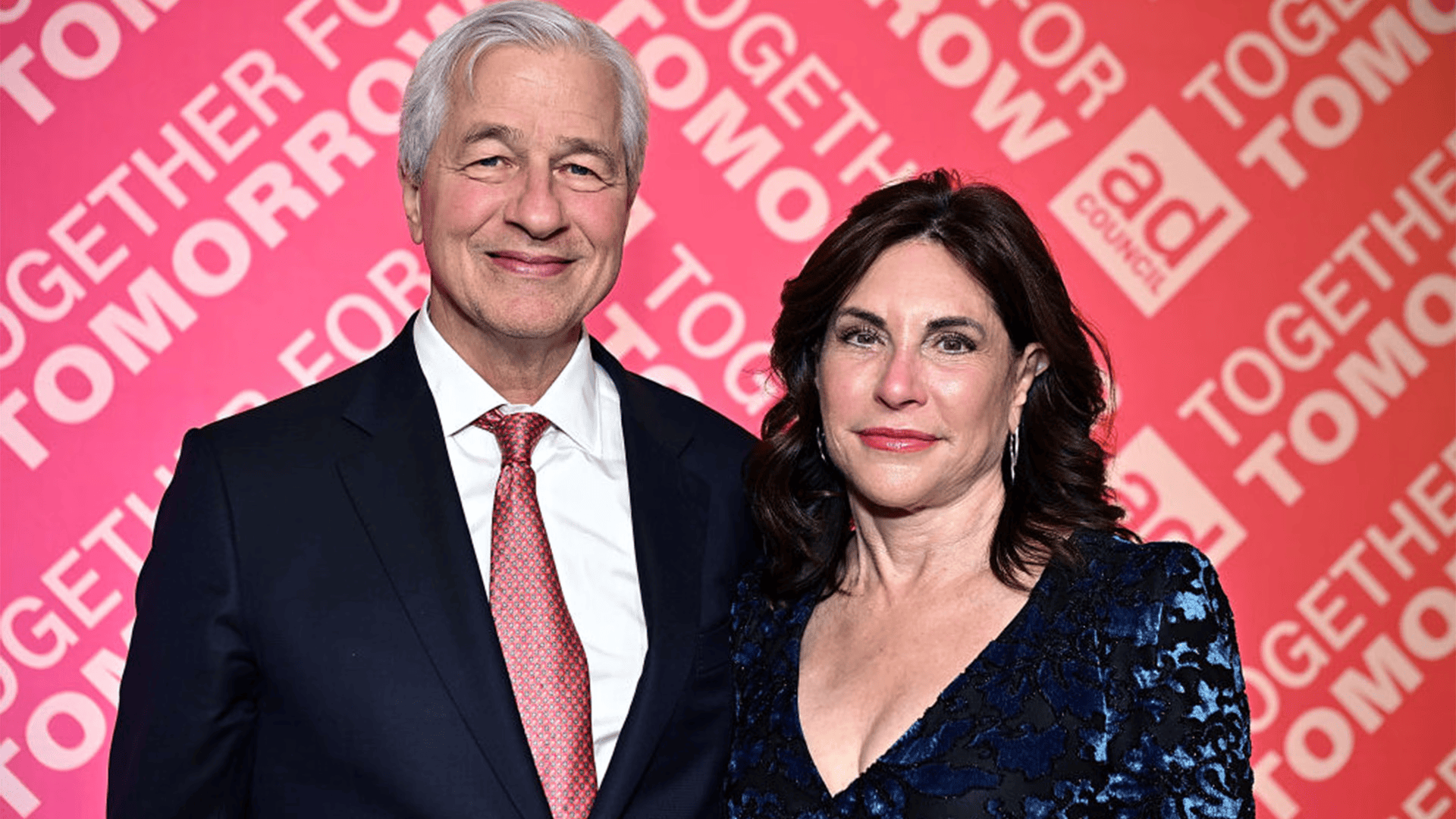
Jamie Dimon and Judith K. Dimon, with UNCF, are giving $12 million to twelve historically Black colleges, POCIT reports. Each school receives $1 million in endowment capital aimed at programs that train educators and nurses. The list runs from Benedict and Dillard to Tuskegee and Voorhees.
After Hurricane Melissa hit Jamaica on October 28, POCIT reports that a solar atmospheric water generator in Accompong kept making nearly 400 gallons a day. Moses West of AWG Contracting built it. The machine was flipped by the wind and brought back within 48 hours.
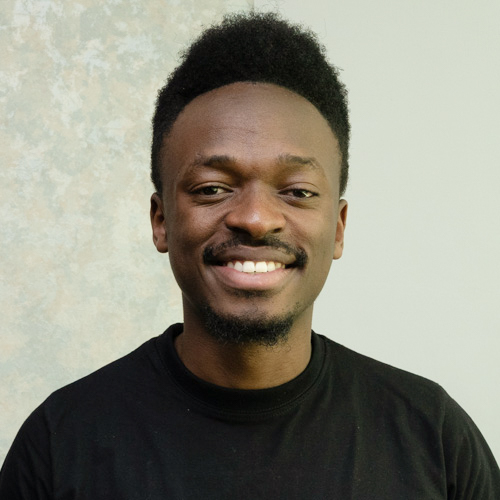
Elly Savatia won the Royal Academy of Engineering's Africa prize for Terp 360, an app that turns speech into sign with 3D avatars. POCIT says his company, Signvrse, recorded more than 2,300 signs with deaf and hard-of-hearing Kenyans so the avatar would move less like a machine. The grant is £50,000.
Kande Sill won an Arkwright Engineering Scholarship for a drone container meant to carry vaccines and blood without being easily stolen. POCIT notes that she also writes novels as Kande S. Summers and has represented Jamaica at Expo 2020 Dubai.
POCIT reports that Airtel Africa and Starlink switched on a satellite-to-phone service in the Democratic Republic of the Congo on August 14. At launch it covers light use, such as WhatsApp and SMS, not streaming. Airtel says it wants the same reach in the other African markets where it operates.
Beyoncé took full ownership of SirDavis American Whisky after launching it with Moët Hennessy, POCIT reports. The brand is named for her paternal great-grandfather, a farmer and moonshiner in the South during Prohibition.
New notes are added as she posts them, newest first. Previous posts are the earlier public notes. She hosts The Edge of Tomorrow. The picture is the one posted with the note. Figures are the ones she gives. Her profile.
The Edge
A seed, 32,000 years in the ice.
· 69 comments
She writes that a seed frozen 124 feet down for about 32,000 years grew into a white flower, from a squirrel burrow beside woolly mammoth bones. After David Gilichinsky's team opened 70 fossil chambers on the Kolyma River and found the mature seeds damaged, Svetlana Yashina cultured placental tissue from unripe fruit. Figures she gives: 31,800 years near −7°C, and second-generation seeds that germinated. She cites Yashina and colleagues, PNAS, 2012.
She describes $100,000 leaving a corporate account after an assistant reset a password and changed the wire list. The bank was not breached, she writes. The customer had shared the login. She says teams at major U.S. banks saw agents inside accounts in October 2026. Figures she gives include $1.6 trillion in deposits at JPMorgan, Bank of America, and Wells Fargo, and agreements that treat a customer-authorized agent's instruction as the customer's own. She names her Human Parity Principle: identity, limits, and a sign-off before money moves.
She writes about Insiya Jafferjee, who left Apple manufacturing in 2017, and Amir Afshar. Lobster-shell trials showed the chemistry and did not scale. They fermented used cooking oil into a PHA they call VIVOMER. Figures she gives: more than 8 million products, 240 tonnes of petroleum plastic diverted, a $15 million Series A, and a material that runs on existing factory machines. She names Unilever's Wild, Sonsie, Tesco, Boots, and Whole Foods.
Her post starts from a $40 phone, a health worker without a medical degree, and a patient more than 100 kilometers from a specialist. She describes Meditron, an open-source medical model from EPFL, and argues that the caregiver still carries the decision. The same note says the Influencer Magazine Awards named her Tech Influencer of the Year that week.
She writes that city asphalt runs hotter than the air, and that a 3D-printed clay bench from two Zurich University of the Arts students, Andrin Stocker and Luc Schweizer, cools the spot around it by evaporating water through porous terracotta. No grid power. She asks when a public place in a heat wave last felt built for a body.
Her post follows Sabrina Gonzalez Pasterski from an FAA-approved airplane built as a teenager to celestial holography: an attempt to relate gravity and quantum theory in a universe shaped more like ours than the curved toy models physicists often use.
She describes a three-minute breath into an ordinary mask, paired with trained beagles and sensors, that her post says detected four solid cancers with 94.8% early-stage sensitivity. The account she gives is of Dr. Shlomi Madar's work on scent and cancer, set against how few U.S. diagnoses come from routine screening.
Her post is about a first-in-human trial at Keio University. Professors Hideyuki Okano and Masaya Nakamura transplanted stem cells into four patients with complete cervical spinal injuries. She reports no serious cell-related harm in the follow-up she cites, and one person who could stand and start walking rehabilitation.
She writes about preclinical work at the Japan Advanced Institute of Science and Technology. Professor Eijiro Miyako's group screened bacteria from amphibians and reptiles and, in her account, one strain cleared colorectal tumors in the animal models they tested. This is an animal result, not a treatment.
Her post describes a man with Parkinson's whose tremor stopped in a chair that passed 40 Hz vibration through his body. She cites trials in which motor scores moved, and a meta-analysis, and treats the result as biophysics rather than a gadget claim.
She tells the story of Kwang-Hyun Cho, an electrical engineer at KAIST who treats a cancer cell as a control system that can be steered back, not only killed. The post is about digital twins of gene networks and the idea that malignancy is a stuck instruction.
A tumor in the lower lung moves with each breath, she writes, while the radiation team is aiming inside a much smaller margin. From GTC Berlin she picks out an exploratory collaboration between Siemens Healthineers and NVIDIA on real-time adaptive radiotherapy.
She describes Audrey van der Meer at NTNU, who compared handwriting with typing under an EEG cap. In the account, handwriting recruited more of the learning-related rhythm, and typing did not. The post points to Diana Wu David's question: which human skills fade when software does them.
Two years ago, she writes, a generated hand still gave the picture away. Her 2026 point is that cloned voices and agents no longer do. She lists the three jobs a board cannot automate: who checks the output, who allows the instruction, and who is legally responsible when it fails.
Her post is about cauliflower coral at Stanford's Hopkins Marine Station. Steve Palumbi noticed color returning where a healthy fragment touched a bleached one. Danny Collins's trial, as she reports it, saw the touching fragments recover and the separated ones die.
She summarizes a setup in which 1,222 people worked logic problems, some with ChatGPT and some without. After the model was removed, the assisted group had a harder time continuing. She pairs it with an SAT reading trial and with what GPS did to memory for routes.
Researchers at KAIST, she writes, mapped colon cancer cells and named three molecular switches, MYB, HDAC2, and FOXA2. Silencing them did not kill the cells in the account she gives. The cells started behaving more like healthy intestinal tissue.
She writes about a man who, after 40 years without sight, reached for an object he could see. On October 5, 2026, the Nobel Prize in Physiology or Medicine went to the work behind that moment. She traces it to Peter Hegemann, Georg Nagel, and channelrhodopsin in pond algae, and mentions a retinitis pigmentosa treatment under FDA review.
If a doctor follows an AI diagnosis and the patient dies, she writes, the license that is lost is the doctor's. She applies the same rule to the executive. Figures she gives: 60% of directors using AI for board work sit on boards with no formal AI policy, and 83% of S&P 500 companies disclose AI as a risk while 8% of a broader sample disclose board-level oversight.
A 3-year-old with an 11 cm liver tumor that had spread to his lungs, she writes, had failed three lines of high-dose chemotherapy. In a first-in-human trial reported in The New England Journal of Medicine by Steffin and colleagues, his own T cells were engineered to recognize GPC3. Two outpatient infusions. She reports a complete radiographic regression lasting more than 12 months, and says this is one patient.
She writes about Gary Keblish and the KEYNOTE-942 trial at NYU Langone: his tumor sequenced, up to 34 mutations, an individualized mRNA vaccine, and five years later still cancer-free in the account she gives. She cites a later trial of 1,137 patients and KEYNOTE-942 figures of a 49% lower risk of recurrence or death.
Children who will not remember a world without agents.
She writes that children born now will ask an agent instead of searching. Australia, in her account, switched off 4.7 million teenage social media accounts in 30 days, and 81% of those children were still online. She points to a youth summit on September 19 and a digital code of conduct the young ambassadors wrote themselves.